
Indigenous Support and Resources

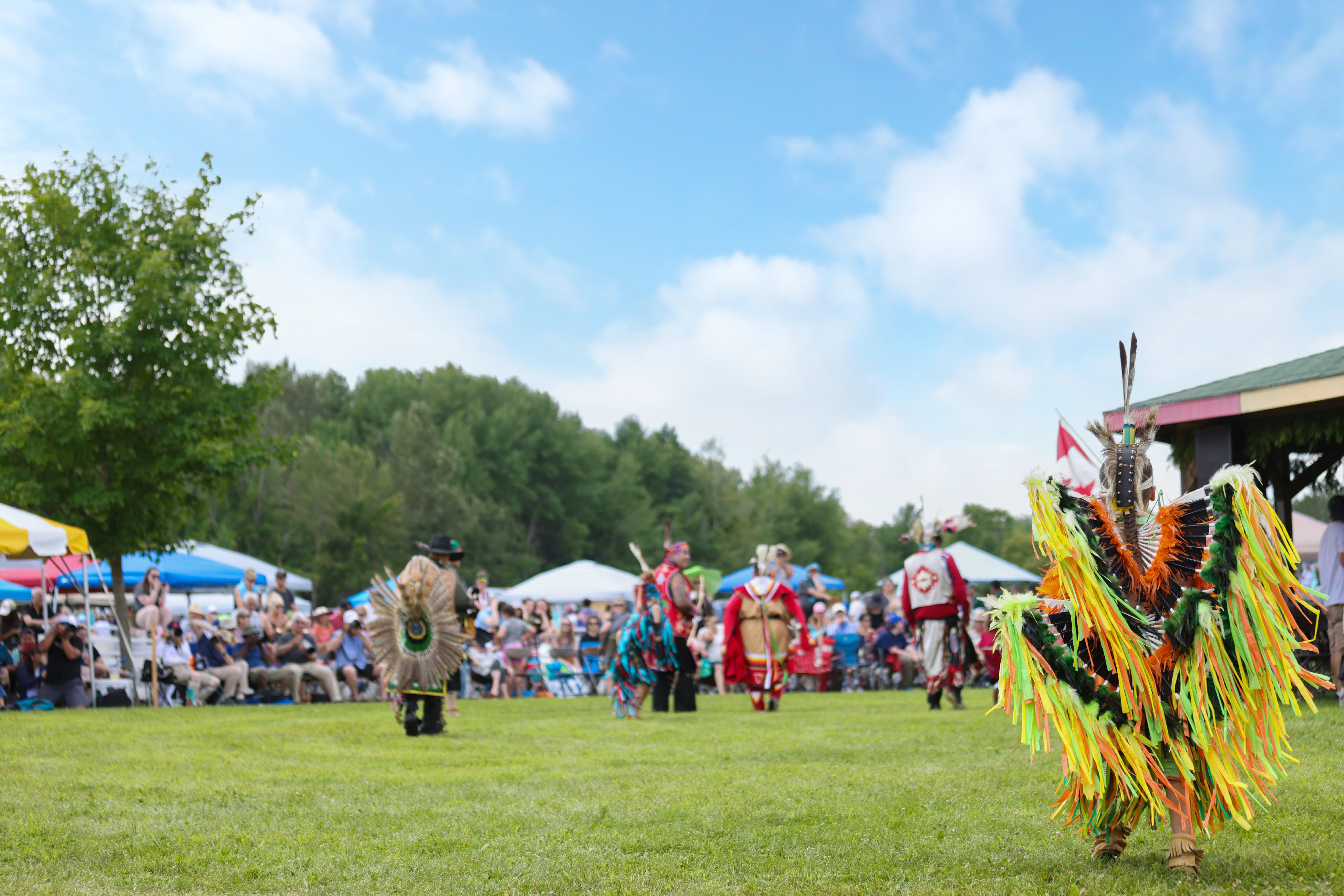
Dancers perform at the Mississaugas of Scugog Island First Nation Pow Wow

The Region of Durham exists on lands that the Michi Saagiig Anishinaabeg inhabited for thousands of years prior to European colonization. These lands are the traditional and treaty territories of the Nations covered under the Williams Treaties, including the Mississaugas of Scugog Island First Nation, Alderville First Nation, Hiawatha First Nation, Curve Lake First Nation, and the Chippewa Nations of Georgina Island, Beausoleil and Rama.

We honour, recognize, and respect Indigenous Peoples as rights holders and stewards of the lands and waters on which we have the privilege to live. In our efforts towards reconciliation, we continue to build and strengthen relationships with All First Nations, as well as the large Métis community and growing Inuit community here in Durham. We commit to learning from Indigenous values and knowledge, building opportunities for collaboration, and recognizing that we are all connected.

What is a Land Acknowledgement?
A territorial or land acknowledgement is an act of reconciliation that involves making a statement recognizing the traditional territory of the Indigenous Peoples who called the land home since time immemorial, before the arrival of settlers.

A land acknowledgement reminds us that we are accountable to respectful relationships with Indigenous communities and that accountability involves all of us listening, learning, and reflecting on the historic and ongoing injustices in these communities. It is a reminder about our responsibility to work towards repairing harm caused as a result of colonization.

Many years ago, when communities would get together, visitors would acknowledge the inhabitants or keepers of the land to demonstrate respect. When acknowledging the land that we reside, work, and play on, it means you are recognizing you are on unceded territory and showing respect to Indigenous Peoples as the rightful inhabitants of the land and waters.

How do we create a Land Acknowledgement?
As guests on this land, it is important that we acknowledge the distinct impact of colonialism that prevents the people, animals and plants, who are Indigenous to this territory, from being here. It is imperative for us to take the time to learn and understand the stories of the true knowledge keepers of the land that we currently call home.

In developing your statement, ensure you know the correct name of the Indigenous Peoples stewarding the land and can pronounce the names properly. Use past, present and future tense to show that you are aware that Indigenous Peoples are still here and continue to be stewards of this land. Although the statement is a significant acknowledgement, it should not be sorrowful or apologetic but instead evoke a sense of empowerment with Indigenous Peoples.

Acknowledging Traditional Territory

Durham Region is committed to advancing truth and reconciliation, and working towards building renewed relationships to address past harms.
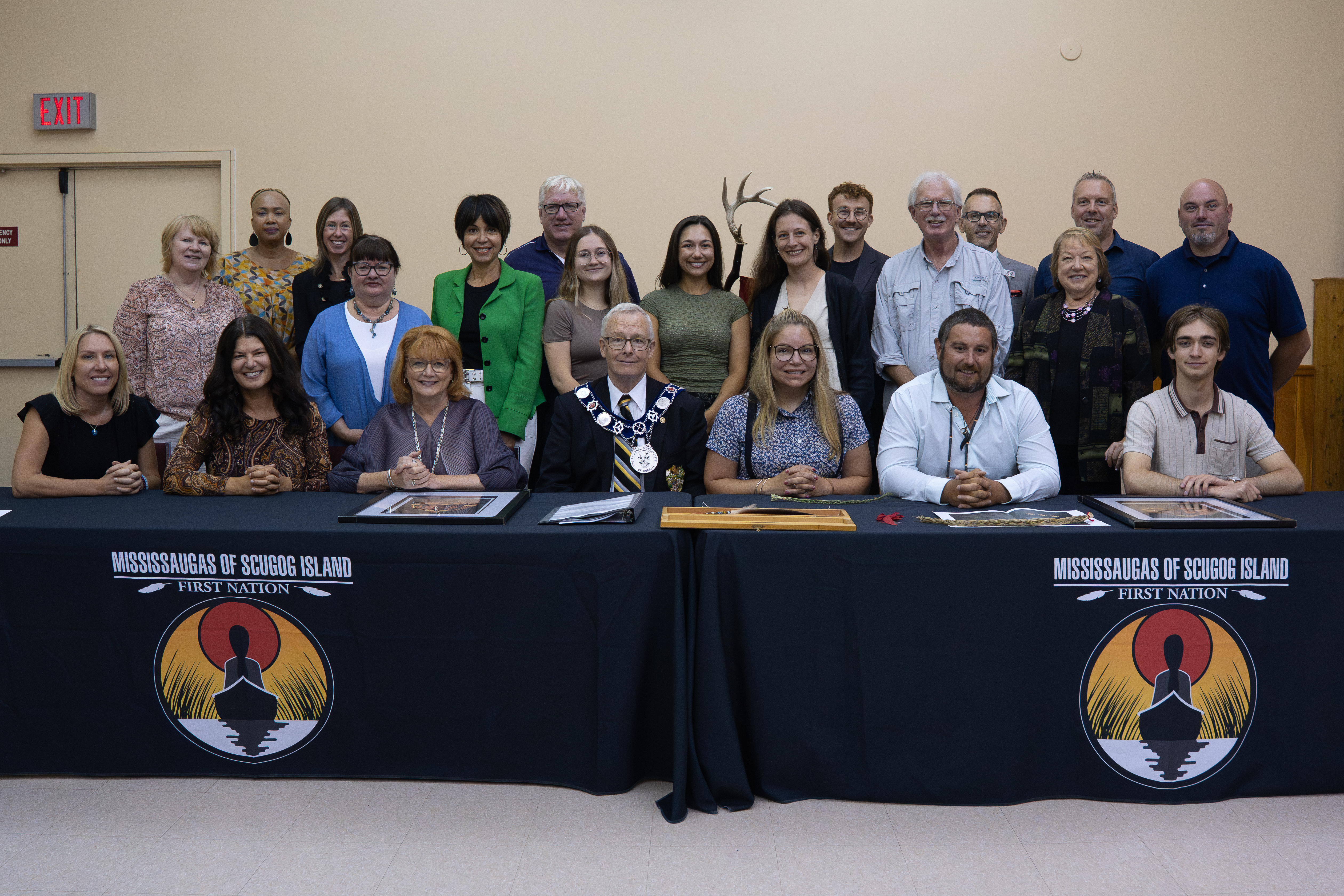
The Region of Durham (the Region) and the Mississaugas of Scugog Island First Nation (MSIFN) have entered into a Bilateral Agreement, committing to further strengthening their relationship through the development of strong partnerships and meaningful engagement.

The agreement establishes a foundation for government-to-government collaboration between MSIFN and the Region and upholds the principles of reconciliation and the rights of Indigenous peoples, while exploring new opportunities to advance shared goals.

Guided by mutual respect, this agreement highlights areas of initial interest and sets a foundation for restoration, reciprocity and future collaboration.

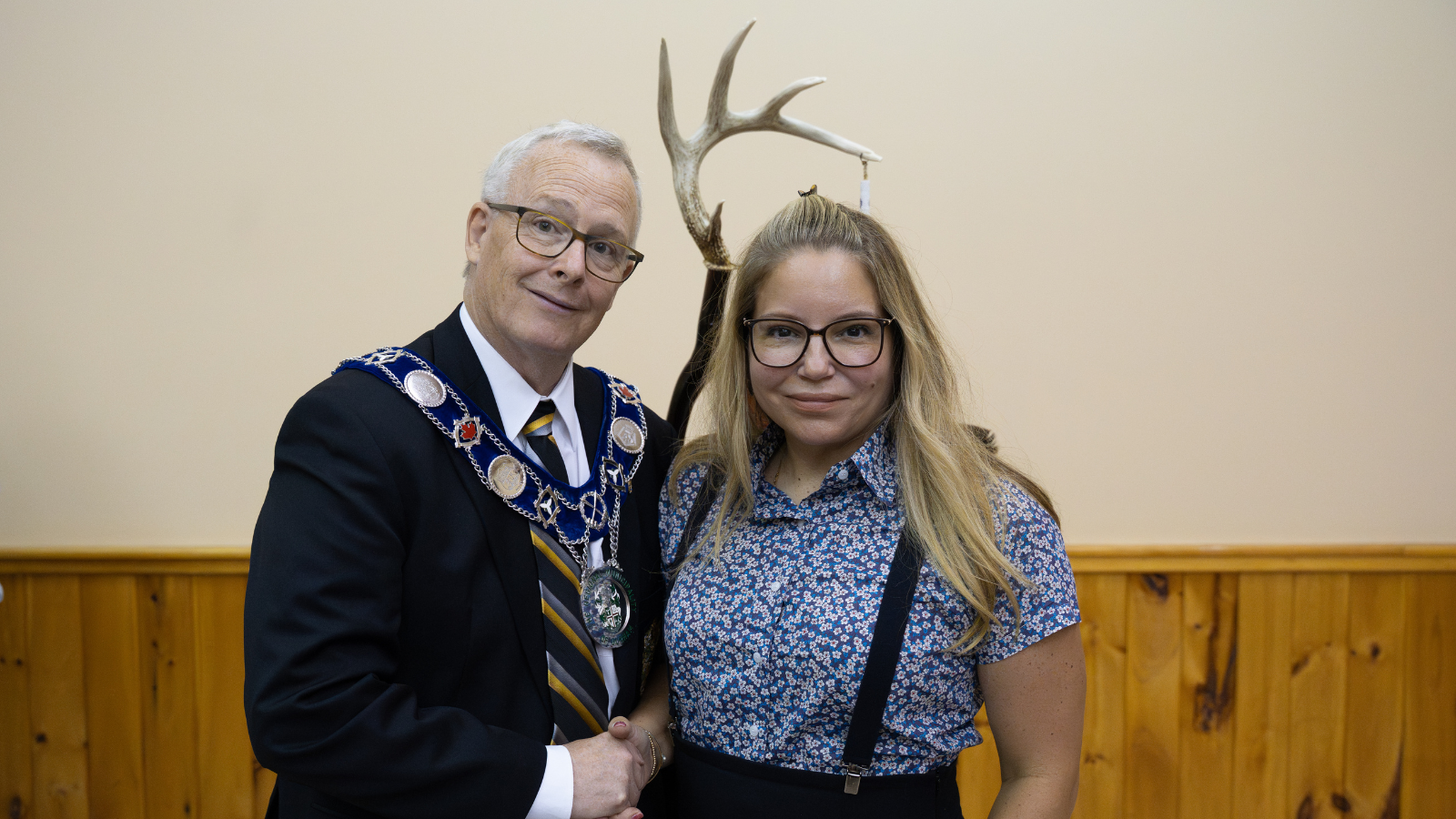
The Bilateral Agreement was signed on July 30, 2025 by Regional Chair and Chief Executive Officer John Henry, Regional Chief Administrative Officer Elaine Baxter-Trahair and Mississauga’s of Scugog Island First Nation Chief Kelly LaRocca.

Read the Bilateral Agreement here.

Representatives from the Region of Durham and Mississaugas of Scugog Island First Nation at the Bilateral Agreement signing Regional Chair and CEO John Henry and Chief Kelly LaRocca shake hands at the signing of the Bilateral Agreemenr

The Region of Durham recognizes the painful legacy and continued impact of colonization, residential schools and discriminatory laws on Indigenous communities.

To advance truth and reconciliation, while also continuing to build strong partnerships and meaningful relationships with Indigenous communities, the Region has carried out many educational and institutional initiatives.

Below are some highlights.

  • 2017 – The Region hosts a four-part Indigenous workshop series on history and relationship building for employees.
  • 2019 – The Region’s Land Acknowledgement is read at Council. Employees are called to personalize their acknowledgement of the land and reflect on how it relates to their work.
  • 2021 – Members of Senior Leadership at the Region participate in an in-depth three-part Indigenous Cultural Safety training session to provide sound foundational knowledge to incorporate into the development and delivery of Regional programs and services.
  • 2021 – Mississaugas of Scugog Island First Nation and Curve Lake First Nation consult on the development of the Region’s 2021 Nuclear Sector Strategy.
  • 2021 – On National Indigenous Peoples Day, the Mississaugas of Scugog Island First Nation flag is raised to fly permanently at Durham Region Headquarters, alongside the Region and local area municipality flags.
  • 2022 – The Region’s Works Department signs a formal water and wastewater service agreement with Mississaugas of Scugog Island First Nation.
  • 2022 – Regional Diversity, Equity and Inclusion employees developed a series of learning modules on Indigenous Histories and Reconciliation covering topics such as historical context, and the Seven Grandfather teachings of love, respect, bravery, truth, honesty, humility and wisdom.
  • 2022 – Local Indigenous artist Jon Colwell designs and installs an orange crosswalk and Pathway to Reconciliation plaque at Regional Headquarters, as part of the Remembering the Children memorial.
  • 2023 – The Manager of Indigenous Relations position is created and filled, to oversee the strengthening of community relationships.
  • 2023 – Indigenous businesses are invited to participate in a showcase series highlighting their products and services for regional employees and local area municipalities.
  • 2024 – The Region’s DEI, and Indigenous Advocacy committee hosts the Durham Region Truth and Reconciliation Awareness Walk.
  • 2024 – The artwork of Indigenous artist Nyle Miigizi Johnston is featured on a Durham Region Transit bus wrap.
  • 2024 – The Indigenous Advocacy Subcommittee at the Region achieves majority representation of Indigenous voices.
  • 2024 – Dedicated smudging spaces and guidelines are created at Regional Headquarters to allow Indigenous employees and guests to conduct this traditional practice.
  • 2024 – Indigenous artist Brent Hardisty’s work “Praying to Tree of Life” is installed at the south entrance of Regional Headquarters.
  • 2025 – Canadian Geographic’s Indigenous Peoples Atlas is installed for the month of June, in recognition of National Indigenous History Month
  • 2025 – Regional Council approves the 2025 Durham Region 10-Year Strategic Plan which confirms the foundational priority of building and strengthening relationships with Indigenous communities.
  • 2025 – A fully revised version of the Durham Region Indigenous Engagement guidelines, entitled Braiding Pathways: Guidelines for building respectful and collaborative relationships with Indigenous people and communities, is developed and released.

The following is information and resources for Indigenous peoples and others impacted by the residential school system on this page. This content includes distressing information - we hope that you can access the resources you need to feel supported.

Residential School Survivors Helpline: 1-866-925-4419

Indian Residential School Survivor's Society (IRSSS): A provincial organization with a twenty-year history of providing services to Indian Residential School Survivors.

Watch the following videos to learn more about the devastating impact of the residential school system.

Each year on September 30 the Region acknowledges National Day for Truth and Reconciliation. This day provides us with time to reflect on relationships—both past and present—with Indigenous Peoples. This is just one step on the long and important journey ahead towards reconciliation.

In 2015, the Truth and Reconciliation Commission of Canada released a comprehensive report on residential schools and their lasting impacts. The report included 94 Calls to Action that provide a road map towards reconciliation for all sectors of Canadian society.

Learn more:

First Nations, Inuit and Métis communities have distinct histories, languages, cultural practices and spiritual beliefs. Learn more about respecting the cultural diversity of Indigenous communities.

Learn more about treaties and land acknowledgements, the Williams Treaties First Nations Settlement Agreement and its signatories, the Mississaugas of Scugog Island First Nation, Alderville First Nation, Hiawatha First Nation, Curve Lake First Nation, and the Chippewa Nations of Georgina Island, Beausoleil and Rama.

Note: The content listed below may include distressing details for viewers and readers. Support is available - please use the resources on this page or call the helpline for residential school survivors at 1-866-925-4419.

Culturally safe counseling and support resources for Indigenous peoples

For immediate support, call the Residential School Survivors Helpline: 1-866-925-4419.