Lead Service Replacement Program

The lead service replacement program is a proactive approach to reducing lead water service pipes in Durham Region.

Lead was once thought to be a beneficial plumbing material as it is highly malleable and resistant to corrosion. Municipalities and contractors phased-out lead pipes for use in plumbing when the negative health effects associated with lead were recognized. The National Plumbing Code banned the use of lead piping in 1975 and later banned the use of lead solder and fittings in the mid 1980s. Replacing any existing lead water service pipes is the best way to reduce your exposure to lead in drinking water.

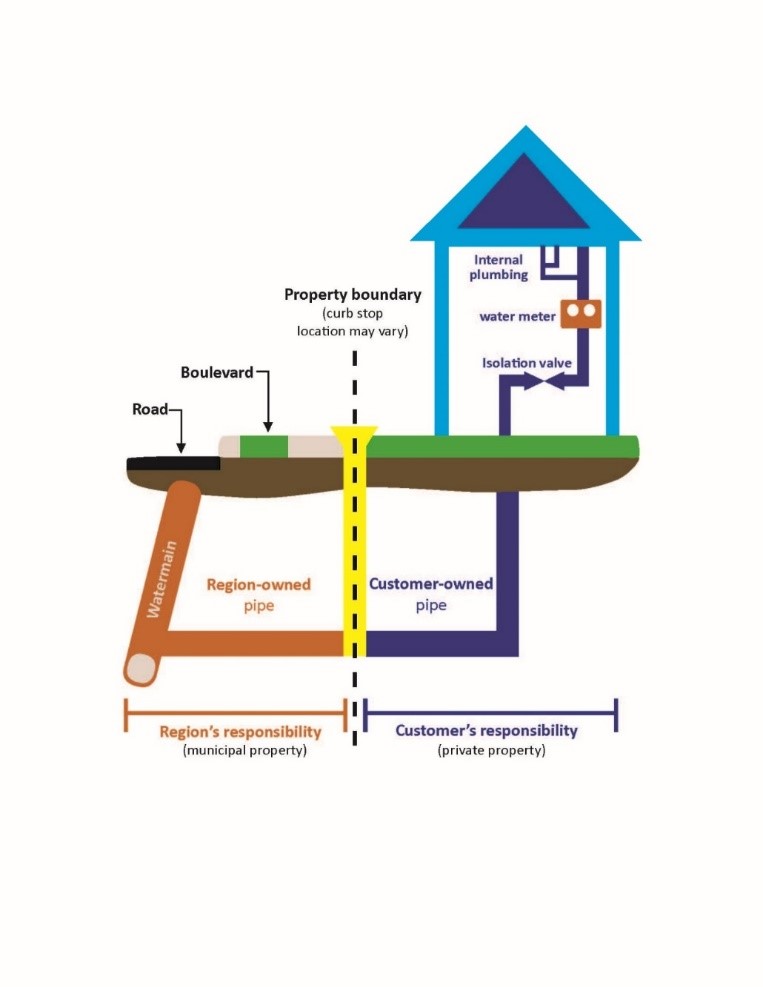
The water service pipe delivers water from the watermain to a building. This service pipe is jointly owned by both Durham Region and the customer (property owner). The service pipe on private property is the responsibility of the property owner as illustrated by the diagram.

Lead service replacement program diagram

Durham Region offers free drinking water testing for lead in residences and businesses receiving municipal water supply. To qualify, buildings must have been built prior to 1990.

For more information or to schedule sample collection, you may complete the online Lead Testing Request Form or contact the Works Department, Water Resource Monitoring and Protection Division by phone at 905-668-7711 extension. 3488 or by e-mail at WorksTechnical@Durham.ca.

Once a water sample request is received, a technician will confirm that the address provided qualifies for a free sample. Once confirmed, you will be mailed a package that includes sample bottles, a chain of custody form and instructions for taking the sample.

The sample must be taken from the kitchen tap (or tap most commonly used for drinking) and will take approximately forty-five minutes. During this time, it is important to ensure there is no other water use throughout the entire building.

After the sample is collected, you may mail or deliver the sample bottles and completed chain of custody form to the York-Durham Regional Environmental Laboratory where the analysis will take place. Results will be provided to you as soon as they are available through email.

The Works Department is currently requesting volunteers from Bowmanville in the Municipality of Clarington to allow water samples to be taken from their internal plumbing, as part of the Region’s Lead Monitoring Program.

This program was implemented throughout municipalities in Ontario to comply with the Ontario Ministry of the Environment, Conservation, and Parks Drinking Water System Regulations.

To participate in the program, volunteers must:

  • Be on the municipal water supply system.
  • Not have the main water tap, used for drinking and cooking purposes, exposed to treatment devices such as a water softener or filtering device.
  • Be able to allow 30 to 35 minutes without using water through your plumbing system prior to taking samples.

Participants in this program will have their residence or business visited by Regional staff twice each year, at pre-arranged times, to take water samples from the tap. The samples will be analyzed for lead, and volunteers will receive a copy of the analytical results. There will be no charge for this service.

To participate in the program, or for more information, contact LeadMonitoring@durham.ca or dial 311 (within Regional limits) or 905-668-7711 ext. 2059 (toll free at 1-800-372-1102).

Please be prepared to provide your name, contact details, address, age of building, type of plumbing and any treatment devices being used. Only a limited number of participants will be chosen to take part in this program.

Lead water service pipes are typically found in homes built prior to the mid-1950s. If possible, examine the pipe that connects to the water meter. Lead pipe is generally a dull grey colour, is soft and will turn a bright silver colour when scratched with a key or coin. To confirm whether your home has a lead pipe, it is recommended that you hire a licensed plumber.

If you have a confirmed lead service and are planning to replace the private portion of your lead service, Durham Region will replace the lead pipe on municipal property to ensure a full lead service replacement. Complete the Lead Service Replacement Application Form and send the application form along with supporting documentation, to the contact information provided on the form.

The costs associated with replacing the service pipe on private property is the property owner’s responsibility. Durham Region will only fund and replace the Region-owned water service pipe.

Upon replacement of a lead water service, you will receive:

  • Information package: The Health Department's Lead in Drinking Water fact sheet and internal plumbing flushing instructions to follow post-replacement.
  • Free supply of NSF-53 approved water pitcher and filters for lead removal.
  • Complimentary water sampling to be completed six-months following a lead water service replacement.

Complete lead service pipe replacement

  • The best way to reduce your exposure to lead is to have both the Region-owned and customer-owned portion of the lead pipe replaced. Research has shown that replacing only a portion of the lead service may cause an increased concentration of lead in drinking water due to the disruption of the pipe upon replacement.

Use water filters that are certified for lead removal

  • Use a point of use or inline filtering system that is certified by the National Sanitation Foundation for lead removal and reduction from drinking water (NSF-53).

Use an alternative source of water for cooking and drinking

  • Boiling water will not remove lead, it is important to take precautions when preparing meals if you have lead in your drinking water.
  • It is recommended that you use bottled water or an alternate source of drinking water for cooking and drinking.

Complete an internal flush after periods of no use

  • If you have not used any water in your home for more than a few hours, you should complete an internal flush to remove any stagnant water that has contacted lead. Open all the cold water taps in your home for three to five minutes or until you feel the temperature change. This will ensure you are receiving the freshest water from the distribution system.

For more information, view the Health Department's Lead in Drinking Water Fact Sheet. You can contact Water Resource Monitoring and Protection Division at 1-800-372-1102 extension 3488 or by e-mail at workstechnical@durham.ca.