
Durham has 12 drinking water systems that operate across our eight area municipalities. These drinking water systems include surface water (such as Lake Ontario and Lake Simcoe) and ground water sources (such as wells).
About Water
The Regional Municipality of Durham's Works Department treats and distributes safe drinking water across our region.
We are home to some of the best tap water in the world. To ensure safe drinking water in the region:
- A sophisticated system processes the water.
- We test the water daily to make sure it is safe to drink.
- The Region's municipal water plants are continuously monitored by staff.
- The Ontario Ministry of the Environment, Conservation and Parks inspects the plants.
Top three reasons to choose tap water over commercial bottled water:
- Municipal water in the Region is clean and safe.
- It reduces waste to fill a reusable container.
- It saves you money.
View our Water Champions video.
Water treatment
Water treatment is the process of taking water from the environment and treating it to produce clean and safe drinking water.
Surface water treatment takes water from open water sources such as rivers or lakes. This treatment process involves both chemical and physical treatment. It removes any biological, organic or inorganic matter from the water.
The two surface water sources in Durham are Lake Simcoe (with a water supply plant located in Beaverton) and Lake Ontario (which has water supply plants in Ajax, Whitby, Oshawa, Bowmanville and Newcastle).
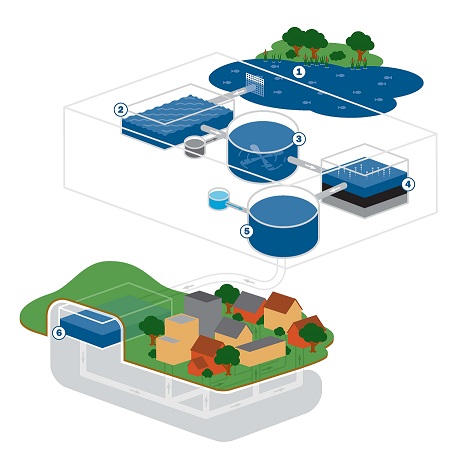
Below is a diagram showing the treatment process of converting lake water into clean drinking water.
- Intake
Lake water flows through an intake pipe into the plant by gravity. Some chlorine is added to keep zebra mussels off the intake. - Screening
Screens remove large items from the water such as fish and logs. - Chemical Treatment: Coagulation and Flocculation
During coagulation, a liquid chemical is rapidly mixed into the water from to help particles clump together. The extension step is flocculation, where slow mixing helps to form even larger clumps so that they are easy to remove from the water. - Filtration
Filters are large basins full of anthracite or granular activated carbon (GAC) and sand. During filtration, the water flows through the filter by gravity, leaving all unwanted particles behind. - Disinfection and Fluoridation
Chlorine is added to eliminate pathogens and to maintain a residual in the distribution system. Disinfection is achieved by the addition of chlorine at multiple locations throughout the treatment plant. Fluoride is added to improve oral health in Courtice, Oshawa, Whitby, Ajax and Pickering - Pumping and Distribution
Once the drinking water is pumped out of the plant, it travels through an underground network of pipes to fill water storage towers and underground reservoirs before arriving at your tap. Drink up!
Groundwater treatment takes water from underground water sources (such as wells). The ground acts as a natural filter for the water, which simplifies the treatment method. The water needs only a small amount of chemicals to control minerals (such as iron) and to maintain disinfection in the distribution system.
There are 22 groundwater wells located in Blackstock, Cannington, Greenbank, Orono, Port Perry, Sunderland, Uxbridge and Uxville.
Water distribution
Water treatment plants distribute water through a system of underground pipes. You may notice water storage towers, reservoirs and pumping stations in your community. These are all part of the distribution system that ensures water is always available.
The water distribution system includes:
- 21 water storage facilities to meet peak demand and fire emergencies.
- 17 pumping stations to ensure that there is enough water pressure.
- 2,470 kilometres of watermains.
Annual water quality reports
The annual drinking water quality reports inform you on your drinking water quality. As per Section 11 of Ontario Regulation 170/03, the owner of a drinking water system shall ensure that the reports are prepared for the preceding calendar year and made available to the public.
The Region must prepare an annual report for each system, and the report must include:
- A brief description of the drinking water system.
- A list of water treatment chemicals used.
- A summary of the test results covered under the reporting period.
- A summary of adverse test results and other issues, including corrective actions taken.
- A description of major expenses incurred to install, repair or replace equipment.
2025 annual water quality reports
- Annual Report Introduction
- Glossary
- Map of Drinking Water Systems
- Beaverton 2025 Water Quality Report
- Blackstock 2025 Water Quality Report
- Bowmanville 2025 Water Quality Report
- Cannington 2025 Water Quality Report
- Greenbank 2025 Water Quality Report
- Newcastle 2025 Water Quality Report
- Orono 2025 Water Quality Report
- Oshawa, Whitby, and Ajax 2025 Water Quality Report
- Port Perry 2025 Water Quality Report
- Sunderland 2025 Water Quality Report
- Uxbridge 2025 Water Quality Report
2024 annual water quality reports
- Annual Report Introduction
- Glossary
- Map of Drinking Water Systems
- Beaverton 2024 Water Quality Report
- Blackstock 2024 Water Quality Report
- Bowmanville 2024 Water Quality Report
- Cannington 2024 Water Quality Report
- Greenbank 2024 Water Quality Report
- Newcastle 2024 Water Quality Report
- Orono 2024 Water Quality Report
- Oshawa, Whitby, and Ajax 2024 Water Quality Report
- Port Perry 2024 Water Quality Report
- Sunderland 2024 Water Quality Report
- Uxbridge 2024 Water Quality Report
2023 annual water quality reports
- Annual Report Introduction
- Glossary
- Map of Drinking Water Systems
- Beaverton 2023 Water Quality Report
- Blackstock 2023 Water Quality Report
- Bowmanville 2023 Water Quality Report
- Cannington 2023 Water Quality Report
- Greenbank 2023 Water Quality Report
- Newcastle 2023 Water Quality Report
- Orono 2023 Water Quality Report
- Oshawa, Whitby and Ajax 2023 Water Quality Report
- Port Perry 2023 Water Quality Report
- Sunderland 2023 Water Quality Report
- Uxbridge 2023 Water Quality Report
2022 annual water quality reports
- Annual Report Introduction
- Glossary
- Map of Drinking Water Systems
- Beaverton 2022 Water Quality Report
- Blackstock 2022 Water Quality Report
- Bowmanville 2022 Water Quality Report
- Cannington 2022 Water Quality Report
- Greenbank 2022 Water Quality Report
- Newcastle 2022 Water Quality Report
- Orono 2022 Water Quality Report
- Oshawa, Whitby and Ajax 2022 Water Quality Report
- Port Perry 2022 Water Quality Report
- Sunderland 2022 Water Quality Report
- Uxbridge 2022 Water Quality Report
2021 annual water quality reports
- Annual Report Introduction
- Glossary
- Map of Drinking Water Systems
- Beaverton 2021 Water Quality Report
- Blackstock 2021 Water Quality Report
- Bowmanville 2021 Water Quality Report
- Cannington 2021 Water Quality Report
- Greenbank 2021 Water Quality Report
- Newcastle 2021 Water Quality Report
- Orono 2021 Water Quality Report
- Oshawa, Whitby and Ajax 2021 Water Quality Report
- Port Perry 2021 Water Quality Report
- Sunderland 2021 Water Quality Report
- Uxbridge 2021 Water Quality Report
2020 annual water quality reports
- Annual Report Introduction
- Glossary
- Map of Drinking Water Systems
- Beaverton 2020 Water Quality Report
- Blackstock 2020 Water Quality Report
- Bowmanville 2020 Water Quality Report
- Cannington 2020 Water Quality Report
- Greenbank 2020 Water Quality Report
- Newcastle 2020 Water Quality Report
- Orono 2020 Water Quality Report
- Oshawa, Whitby and Ajax 2020 Water Quality Report
- Port Perry 2020 Water Quality Report
- Sunderland 2020 Water Quality Report
- Uxbridge 2020 Water Quality Report
2019 annual water quality reports
- Annual Report Introduction
- Glossary
- Map of Drinking Water Systems
- Beaverton 2019 Water Quality Report
- Blackstock 2019 Water Quality Report
- Bowmanville 2019 Water Quality Report
- Cannington 2019 Water Quality Report
- Greenbank 2019 Water Quality Report
- Newcastle 2019 Water Quality Report
- Orono 2019 Water Quality Report
- Oshawa, Whitby and Ajax 2019 Water Quality Report
- Port Perry 2019 Water Quality Report
- Sunderland 2019 Water Quality Report
- Uxbridge 2019 Water Quality Report
2018 annual water quality reports
- Annual Report Introduction
- Glossary
- Map of Drinking Water Systems
- Beaverton 2018 Water Quality Report
- Blackstock 2018 Water Quality Report
- Bowmanville 2018 Water Quality Report
- Cannington 2018 Water Quality Report
- Greenbank 2018 Water Quality Report
- Newcastle 2018 Water Quality Report
- Orono 2018 Water Quality Report
- Oshawa, Whitby and Ajax 2018 Water Quality Report
- Port Perry 2018 Water Quality Report
- Sunderland 2018 Water Quality Report
- Uxbridge 2018 Water Quality Report
2017 annual water quality reports
- Annual Report Introduction
- Glossary
- Map of Drinking Water Systems
- Beaverton 2017 Water Quality Report
- Blackstock 2017 Water Quality Report
- Bowmanville 2017 Water Quality Report
- Cannington 2017 Water Quality Report
- Greenbank 2017 Water Quality Report
- Newcastle 2017 Water Quality Report
- Orono 2017 Water Quality Report
- Oshawa, Whitby and Ajax 2017 Water Quality Report
- Port Perry 2017 Water Quality Report
- Sunderland 2017 Water Quality Report
- Uxbridge 2017 Water Quality Report
2016 annual water quality reports
- Beaverton 2016 Water Quality Report
- Blackstock 2016 Water Quality Report
- Bowmanville 2016 Water Quality Report
- Cannington 2016 Water Quality Report
- Greenbank 2016 Water Quality Report
- Newcastle 2016 Water Quality Report
- Orono 2016 Water Quality Report
- Oshawa, Whitby and Ajax 2016 Water Quality Report
- Port Perry 2016 Water Quality Report
- Sunderland 2016 Water Quality Report
- Uxbridge 2016 Water Quality Report
2015 annual water quality reports
- Beaverton 2015 Water Quality Report
- Blackstock 2015 Water Quality Report
- Bowmanville 2015 Water Quality Report
- Cannington 2015 Water Quality Report
- Greenbank 2015 Water Quality Report
- Newcastle 2015 Water Quality Report
- Orono 2015 Water Quality Report
- Oshawa, Whitby and Ajax 2015 Water Quality Report
- Port Perry 2015 Water Quality Report
- Sunderland 2015 Water Quality Report
- Uxbridge 2015 Water Quality Report
Asset management programs
The formal asset management program includes:
- Evaluation of assets and their condition.
- Identifying key challenges and risks.
- Detailed options analysis.
- Financial strategy with a multi-year economic and financial forecast.
- Assessment of financial options for existing major assets and future growth.
Water master plan study
This study will develop a long-term servicing strategy. The strategy will plan for the design and operation of all water systems in the Region.
The plan will focus on the trunk infrastructure system requirements, including:
- Water treatment plants
- Reservoirs
- Pumping stations
- Water storage facilities
- Major trunk water mains for the distribution system
Integrated management system
An Integrated Management System helps the Region meet the Standard of Care and due diligence requirements by demonstrating that management controls over the Region's municipal drinking water and waste water treatment systems have been established. The Integrated Management System was put in place in 2003 for the Region's municipal drinking water systems. The drinking water systems are registered to the Drinking Water Quality Management Standard (DWQMS) and maintain the requirements of ISO9001 and ISO14001.
The Region is committed to demonstrating leadership through the Integrated Management System, reflected in the Scope Statement, Environmental Policy and the Quality Policy which details the objectives and commitments to delivering an effective management system. These documents are available through the Region's Integrated Management System co-ordinator.
The DWQMS requires that the Operational Plan for the Drinking Water Systems is made available for public viewing at the principal office of the owner and/or on a website that is accessible to the public. If you would like to view the Region of Durham Water Supply Systems Operational Plan, please request access from the Region's Integrated Management System co-ordinator.
Water Financial Plan
As part of the requirement to renew the Municipal Drinking Water License as per the Safe Drinking Water Act, 2002 the Region must prepare and submit to the Ministry of Municipal Affairs and Housing an approved Water Financial Plan. This plan can be accessed at Water Financial Plan.
Facts about water
The following facts will give you more information on the water in your home as well as answers to common questions and concerns.
Asbestos Cement Pipes and Water Supply
The Region of Durham has approximately 65 kilometres of asbestos cement pipe, representing only 2.5 per cent of the Region’s total length of watermain pipe materials.
Health Canada and the World Health Organization have concluded that there is no consistent, convincing evidence that asbestos ingested through water is harmful to your health. If you drink water containing asbestos fibres, you eliminate the fibres, mostly through feces. For this reason, Health Canada has not established drinking water guidelines for asbestos.” Health Canada webpage regarding Asbestos in drinking water.
The Safe Drinking Water Act (Ontario Regulation 170/03), which sets the sampling and testing requirements for drinking water systems in Ontario, does not require testing for asbestos content.
The Region produces annual reports available to the public that provide a brief description of each drinking water system, and a summary of the test results, and expenses. These reports, and more information about our safe Drinking Water Systems, are posted to our website at durham.ca/water under the section titled: Annual water quality reports.
For more information on exposure and health effects of asbestos in drinking water, see Health Canada’s webpage regarding Asbestos in drinking water or contact Durham Region Health Department at 905-668-2020 or 1-800-841-2729, or online at durham.ca\HealthProtectionEnquiry.
Discoloured water may be present after a watermain break and repair. You can fix this by opening up all the cold water taps for 10 minutes. If after this time it does not clear up, contact your local Durham Works Depot.
A watermain break in your area could cause low water pressure. Please contact your local Durham Works Depot for help.
Fine air bubbles in a glass filled with tap water may cause the water to look milky or grey. This is normal, the water in the glass should clear after a few minutes.
Pink film in shower, sink or toilet
Pink film in bathrooms is created by a cluster of common household bacteria. These bacteria thrive in damp environments. You can remove the film with bleach-based cleaning products. Prevent its return by keeping the area dry.
Strong chlorine smell in water
If you find the taste or odour of chlorine in the Region’s drinking water bothersome, you can leave a jug of water either lightly covered or uncovered on the counter or in the refrigerator. Free chlorine will evaporate from tap water exposed to air over time.
Stale or musty taste or smell - seasonal taste and odour episodes
During the warmer weather months, residents may notice changes in the taste and odour of their drinking water. These episodes typically occur in the late summer to early fall and may cause a musty/earthy taste or odour. Many municipalities which get their drinking water from surface water sources will experience the same issue. Drinking water supplied by the Region remains safe to drink.
Taste and odour episodes are caused by seasonal biological changes in Lake Ontario and Lake Simcoe which produces Geosmin and 2-Methylisoborneol. These are naturally occurring compounds in lakes, that do not impact the safety of the drinking water, but can be detected in very small concentrations. The Region’s water quality is not otherwise affected.
It is difficult to predict when conditions will return to normal but taste and odour episodes will generally fade away after the temperature of the lake decreases.
To reduce the taste and odour in the drinking water, residents can refrigerate a jug of water, or add ice cubes and a few drops of lemon juice to the water.
Door-to-door water treatment sales
If you have a salesperson show up to your home claiming to be partners with the Region, you are encouraged to call and confirm with our office at 905-668-7711 extension. 3488.
Water in Oshawa, Whitby and Ajax contains fluoride. The current maximum concentration of fluoride in drinking water is set at 1.5 milligrams per litre. The Region continuously monitors fluoride at the water plants. The Ontario Ministry of the Environment, Conservation and Parks enforces this policy. You can find more information on fluoride from the Region's Health Department.
Hardness is the concentration of minerals such as calcium and magnesium in water.
These minerals naturally occur underground, and groundwater tends to have a higher concentration of these minerals than surface water. The Region has many sources of drinking water with different hardness levels.
| Drinking Water System | Hardness as milligrams per litre Calcium Carbonate |
|---|---|
| Pickering/Ajax/Whitby/Brooklin/Oshawa/Bowmanville/Newcastle | 125 |
| Beaverton | 148 |
| Blackstock | 316 |
| Cannington | 312 |
| Greenbank | 276 |
| Orono | 309 |
| Port Perry | 274 |
| Sunderland | 345 |
| Uxbridge | 186 |
Water softener or home treatment unit
The Region produces water that is safe to drink and meets the aesthetic quality guidelines. To install a water softener or filtration system is a personal preference and not required with the Region's supplied water.
To test your drinking water, you can take a sample to the Regional Environmental Lab. The Region's Health Department is responsible for testing the water quality for private wells.
Typically, when lead is present in drinking water it is due to a lead service connection. If your house was built prior to the mid-1950s, it may have a lead service connection. A licensed plumber will be able to verify this for you. Find out more about the Region’s Lead Service Replacement Program.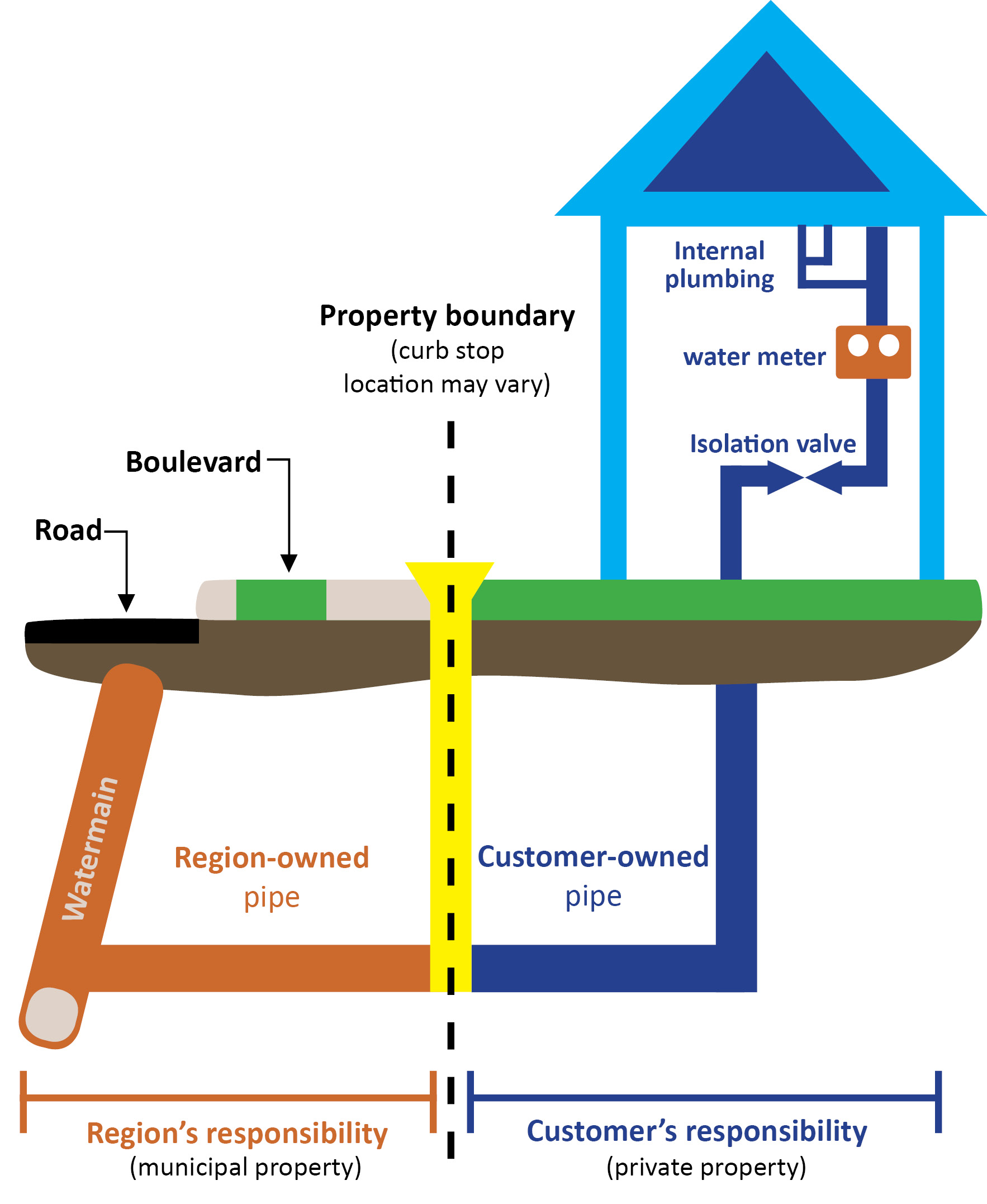
New to the Region of Durham and notice a difference in your water?
Residents moving into the region and using municipally supplied drinking water will sometimes notice a chlorine taste or odour. This is because the Region disinfects with chlorine while other municipalities may use chloramine, which may be less noticeable. The disinfectants used for each individual drinking water system are selected based on the water supply design and distribution system requirements. Both disinfection processes result in safe drinking water. The Region continuously monitors drinking water quality to ensure it meets or exceeds the Ontario Drinking Water Quality Standards set by the Ministry of the Environment, Conservation, and Parks.
If you find the taste or odour of chlorine in the Region’s drinking water bothersome, you can leave a jug of water either lightly covered or uncovered on the counter or in the refrigerator. Free chlorine will evaporate from tap water exposed to air over time.
Learn more about the difference between chorine and chloramines in the folder below.
What is chlorination?
Chlorination is the treatment process of adding chlorine, as done in the Region, to disinfect drinking water. This process involves the addition of free chlorine in a liquid or gas form to our drinking water to reduce or eliminate micro-organisms, such as bacteria and viruses. The chlorine is mixed into the water source at levels which provides proper disinfection while remaining safe to drink. Chlorination may cause unfavourable tastes and odours in drinking water to individuals who are sensitive to chlorine.
What is chloramination?
Chloramination is the treatment process of adding chloramines (chlorine and ammonia) to disinfect drinking water. This process is another method of disinfection, often used in very large cities. The ammonia prevents chlorine from evaporating out of the water which is necessary due to the size of these systems. The chloramine is mixed into water at levels that kill germs but are still safe to drink. Chloramination may cause unfavourable tastes and odours in drinking water, but to a lesser extensionent compared to free chlorine.
How can you reduce chlorine from drinking water in your home?
You can leave a jug of water either lightly covered or uncovered the counter or in the refrigerator. Free chlorine will evaporate from tap water exposed to air over time. Unlike chlorine, chloramine will not evaporate from the tap water as easily.
If you have any questions about our water system or published reports, please contact us.