The sanitary sewer is a system of underground pipes. It moves sewage from the plumbing of homes and businesses to a water pollution control plant. The sewage is treated and cleaned. It goes into local waterways, such as lakes and streams.
Items that are not human waste, water or toilet paper can cause flooding in your home or business. They can cause blockages and backups in our sewer system. Both are costly to repair. On July 1, 2022 the updated Sewer User-Rate By-law came into effect. View a copy of the updated Sewer User Rate By-law.
Think Before You Flush
Our sanitary sewer system is not designed to dispose of anything beyond human waste, toilet paper or wastewater.
You should not flush any other items, even if they claim to be flushable.
Some items, such as cotton balls, disposable wipes and feminine hygiene products may appear easy to flush down the toilet. They can cause the sanitary sewer system to become blocked and should be disposed of in the garbage.
Wipes in your pipes
Bathroom wipes, seen as an alternative to toilet paper, are often advertised as flushable. Do not flush wipes down the toilet. These wipes do not break down the way toilet paper does. They can clump together in the sewer system and cause blockages and back ups.
Even if they are labelled as flushable, disposable wipes should be put in the garbage.
The three Ps of flushing
The only things that should be flushed down toilets are the three Ps:
Small amounts of soapy water are also acceptable.
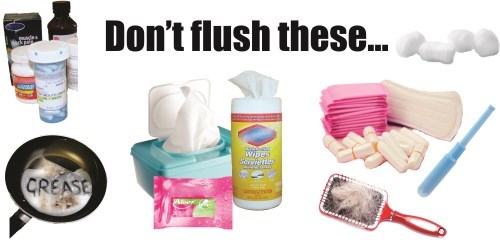 The following is a list of items that should not be flushed down the toilet:
- Garbage
- Green bin waste
- Cat litter
- Disposable diapers and baby wipes
- Personal hygiene wipes
- Feminine hygiene products
- Cleaning wipes
- Disposable mopping wipes
- Cotton balls and pads
- Food waste
- Hair
- Fat, oil and grease
- Blue bin waste
- Newspapers
- Medicine and syringe
- Paint and solvents
- Motor oil and anti-freeze