
We work with the Ontario Ministry of Transportation (MTO), Metrolinx, Toronto Transit Commission, and 18 other regional, county, and single-tier municipalities across the Greater Golden Horseshoe area to conduct the TTS every five years.
Transportation Planning
Transportation Planning
Transportation Planning plays an important role in helping the Region of Durham achieve Strategic Plan and Official Plan goals and objectives related to environmental sustainability, economic prosperity, growth, resource management and service excellence.
The work of Transportation Planning includes:
- Establishing and Updating transportation policies and master plans to provide safe and effective ways of moving people and goods within Durham Region.
- Leading and Coordinating active transportation policies and initiatives in Durham Region.
- Assessing and Forecasting transportation mobility trends and infrastructure requirements on the regional road network.
- Administrating and Monitoring the Region's Cordon Count, Traffic Noise Requests and Walking Network Database.
- Developing and Implementing sustainable transportation and transportation demand management programs such as Smart Commute Durham and Active & Sustainable School Travel.
Plans and Policies
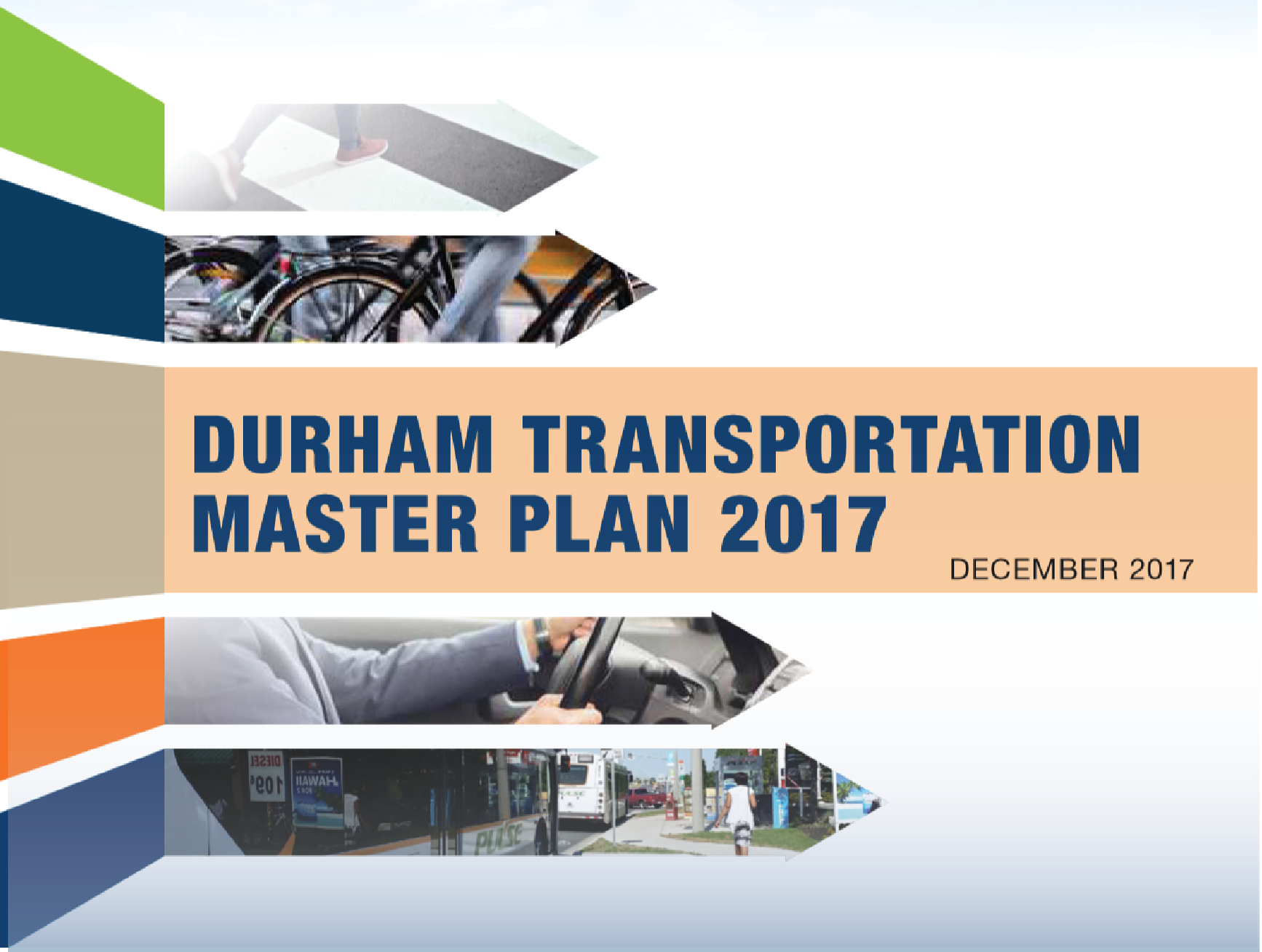 Durham TMP
The Durham Transportation Master Plan (TMP) is a strategic planning document that defines the policies, programs and infrastructure needed to meet the Region’s transportation needs to 2031 and beyond.
 Regional Cycling Plan
The Regional Cycling Plan guides the Region as it works with its area municipalities to implement a comprehensive, region-wide cycling network.
The Regional Trail Network consists of off-road trails that serve a Regionally-significant recreational function.
 Freight and Goods Movement Forum Summary Report
The Freight and Goods Movement Forum Summary Report provides an overview of specific needs, trends, issues, and opportunities for freight and goods movement to help inform and guide the Region's Freight and Goods Movement Strategy update.
 Transportation System Discussion Paper
Prepared for Envision Durham, the Transportation System Discussion Paper serves as a starting point for stakeholder input on the Transportation System.
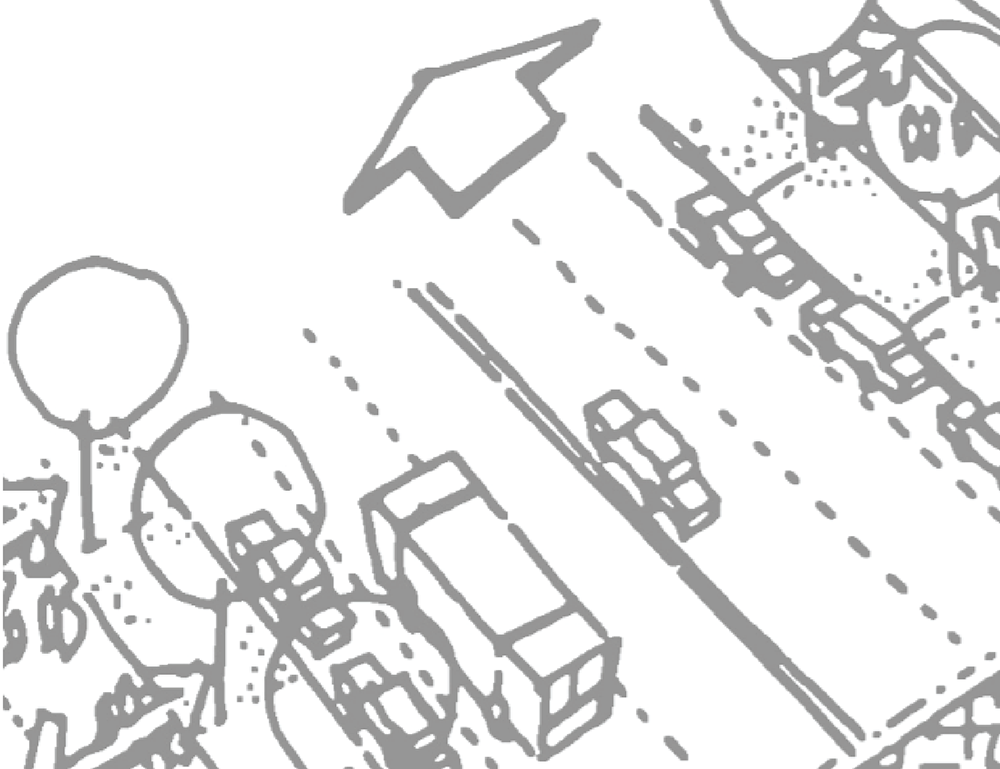 Arterial Corridor Guidelines
The Arterial Corridor Guidelines provide strategies to use when planning and designing major roads in the Region of Durham.
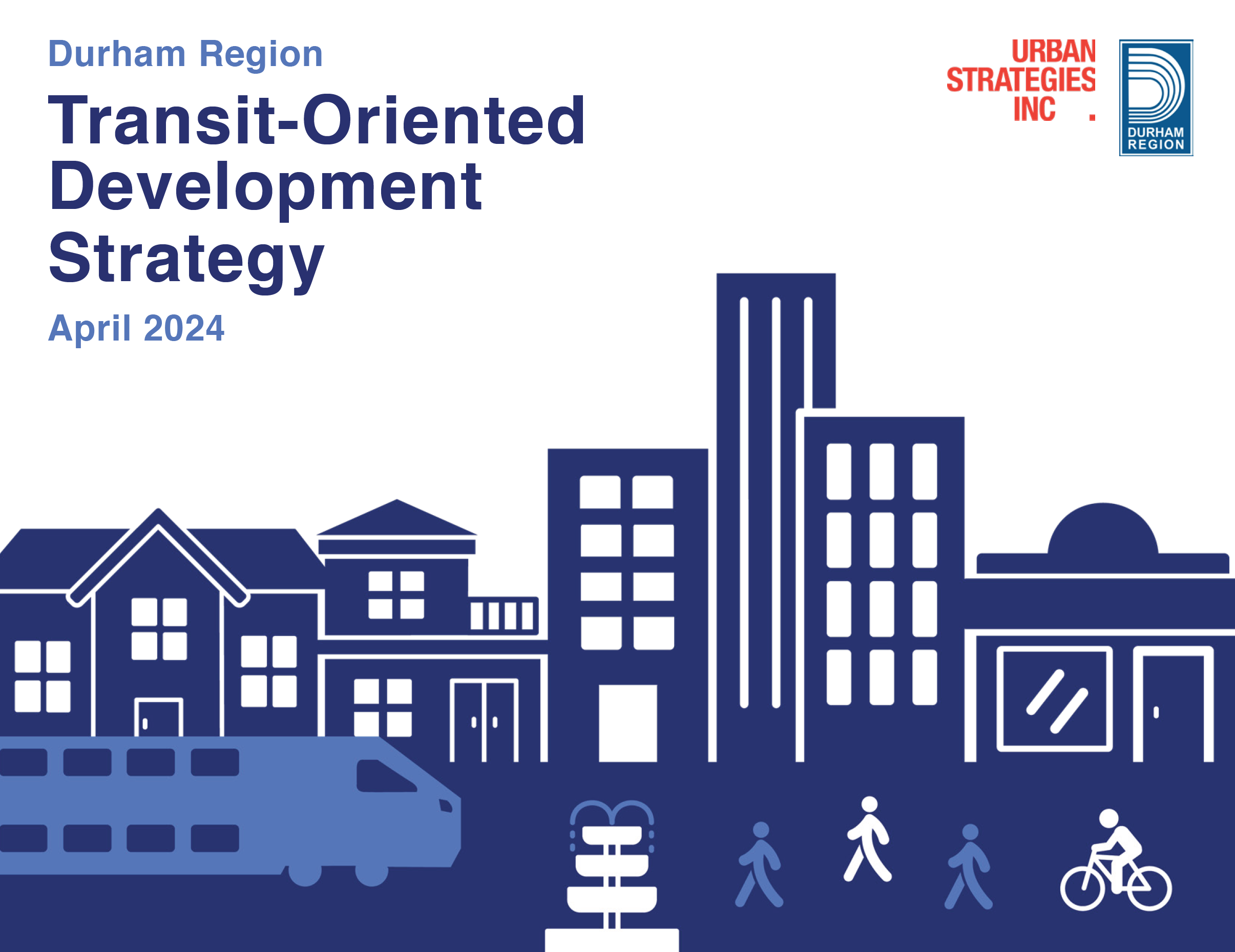 Transit-Oriented Development Strategy
The 2024 Durham Transit-Oriented Development (TOD) Strategy is a guideline document that provides direction for growth related to higher-order transit throughout the region. The purpose of the TOD Strategy is to comprehensively provide direction on how Durham can enable TOD Places and create complete, healthy, sustainable, diverse, and welcoming communities close to existing and planned transit service.
 Cycling Wayfinding and Signage Strategy
The 2024 Durham Region Cycling Wayfinding and Signage Strategy and Appendices is a guideline document that provides guidance on wayfinding elements and navigational features, including sign types, design and fabrication, sign planning and placement, as well as costing, installation, and maintenance considerations to support with the implementation of signage and wayfinding elements for cyclists along the Primary Cycling Network (PCN).
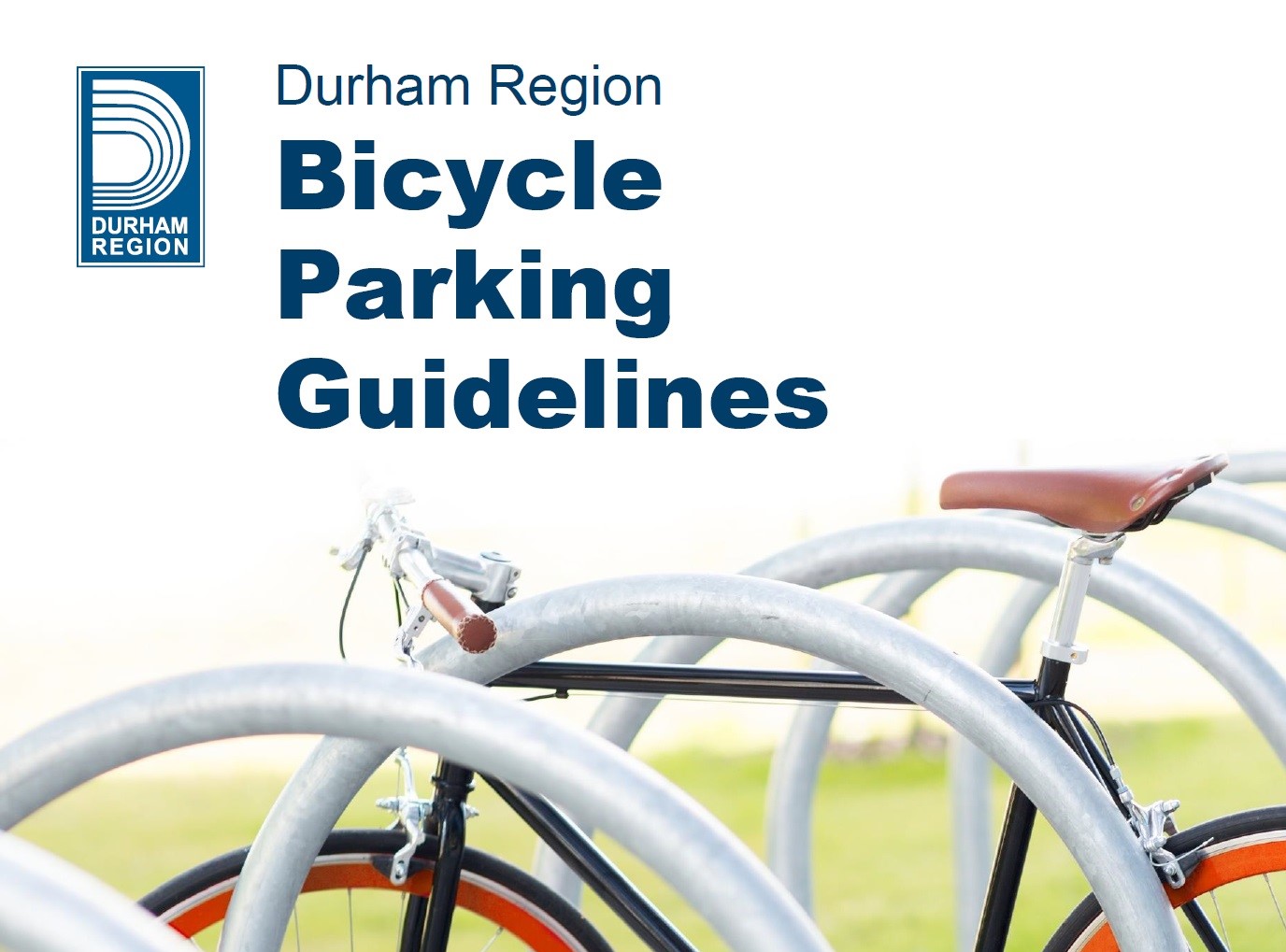 Bicycle Parking GuidelinesComing Soon - The Durham Region Bicycle Parking Guidelines (March 2026) provide a framework for guiding the design, planning and management of bicycle parking across the Region. The Guidelines are intended to help make cycling a more viable option for Durham residents by improving the quality, consistency and convenience of bicycle parking. The Guidelines also include Appendix A (Background Review and Existing Conditions) and Appendix B (Engagement Summary).
Data Collection
Transportation Tomorrow Survey
The Transportation Tomorrow Survey (TTS) collects information on trips you make on a typical weekday. The TTS uses this information to plan and to improve transportation services.
The Cordon Count Program (CCP) measures changes in travel patterns across Durham Region and the Greater Toronto Area (GTA). The purpose of the CCP is to:
- Produce travel data to help understand current road use.
- Assess the need for new road improvements.
- Develop policies for sustainable transportation.
The Ministry of Transportation (MTO) conducts a Travel Time Study every two years. The study collects survey data on weekday morning, midday, and afternoon peak periods. This measures travel time on provincial highways in the GTA. The MTO uses the results to track road efficiency. The information also helps MTO find critical road sections that need improvement.
Smart Mobility Durham
Smart Mobility Durham is the umbrella for the Region’s three Transportation Demand Management (TDM) programs, Smart Commute Durham, Cycle Durham and the Active and Sustainable School Travel Program. These programs reduce the number of single-occupancy vehicle trips by making it easier and more attractive for travellers to use active and sustainable modes of transportation such as walking, cycling and transit.
Smart Mobility Durham Programs
 Smart Commute Durham
Smart Commute Durham provides employees and employers with resources, events, online tools and action planning support to encourage travel behaviour change in workplaces.
 Cycle Durham
Cycle Durham organizes community-facing awareness campaigns and events such as Bike Month and WALKtober that encourage residents and visitors to cycle and use other forms of active transportation.
 Active and Sustainable School Travel Program
The Active and Sustainable School Travel (ASST) Program engages stakeholders across Durham to increase school zone safety and encourage more students to walk, cycle and take the bus. For information on participating schools to date, see our map.
Annual Reports
Smart Mobility Durham 2021 Snapshot
Smart Commute Durham Bike Month Report - 2022
Smart Mobility Durham 2022 Snapshot
Smart Mobility Durham Bike Month Report - 2023
Active Transportation Progress Report - 2022-2023
Smart Mobility Durham 2023 Snapshot
Smart Mobility Durham 2024 Snapshot
Active Transportation Progress Report - 2023-2024
Other Resources
Learn more about active transportation in Durham Region on our Cycling and Walking information and resources page.
Learn more about the benefits of carpooling, and Park and Ride locations in Durham Region, on our Carpooling page.
Access to transit and transportation systems
Durham Region Transit (DRT) is a local transit system serving all of Durham's communities.
GO Transit is a regional public transit system. They serve the Golden Horseshoe area of Ontario.
VIA Rail Canada offers train services between many Canadian cities.
If you take transit often, or use multiple systems, learn about PRESTO.