
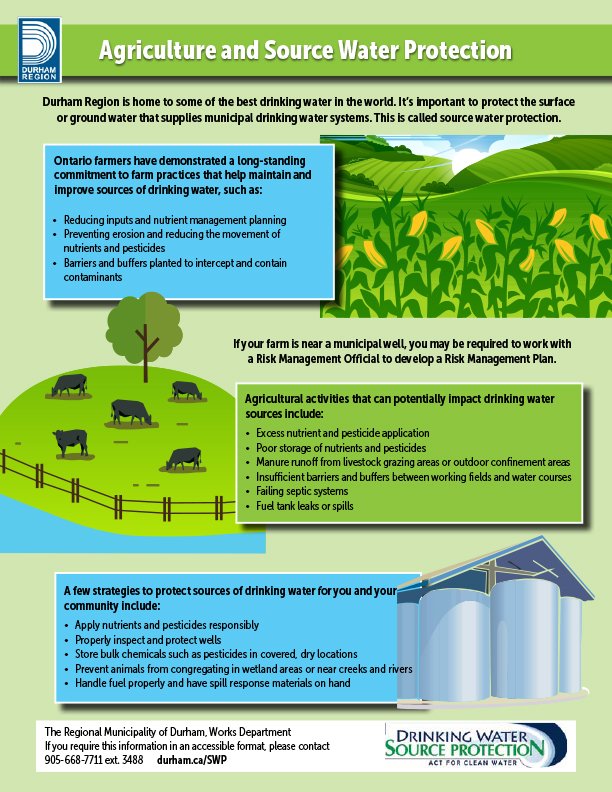
 Agriculture and Source Water Protection
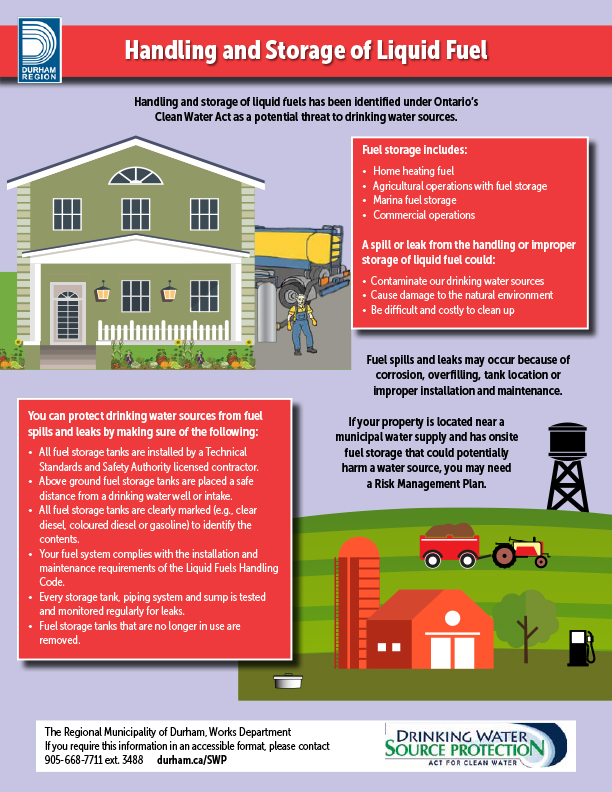 Handling and Storage of Liquid Fuel
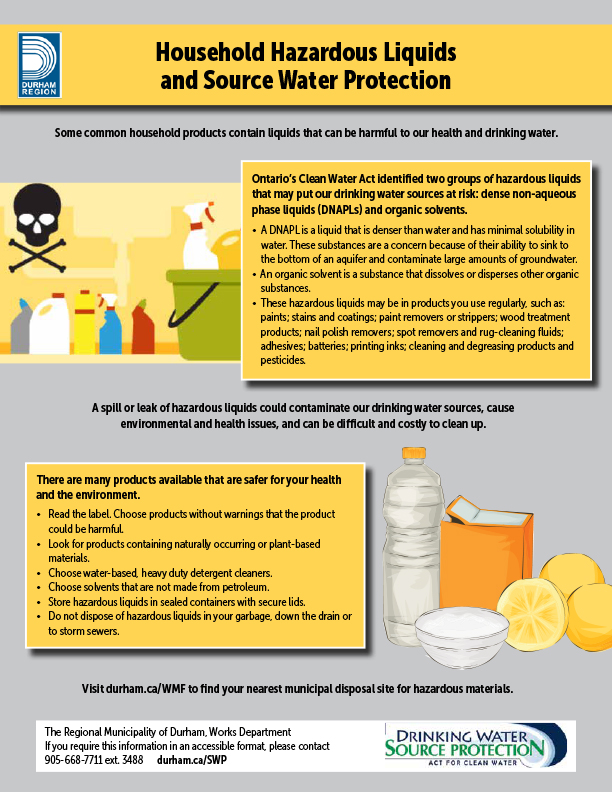 Household Hazardous Liquids fact sheet
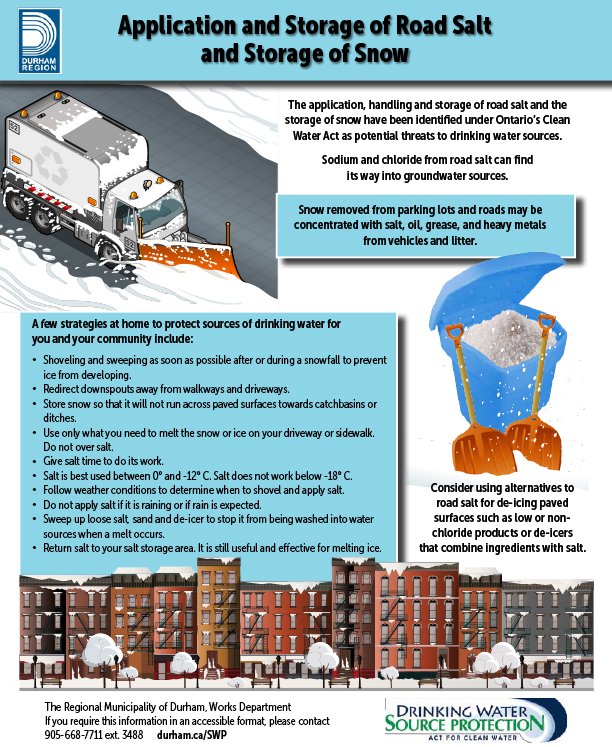 Application and Storage of Road Salt and Snow
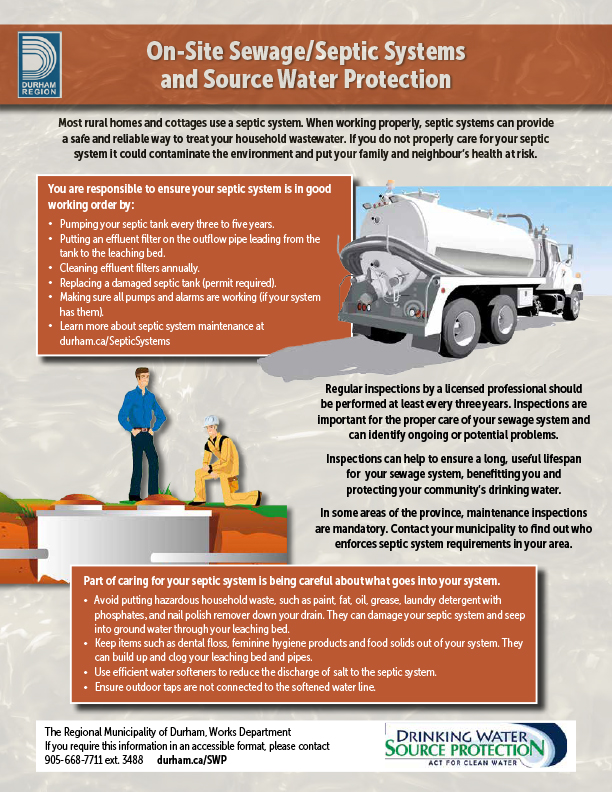 On-Site Sewage / Septic Systems
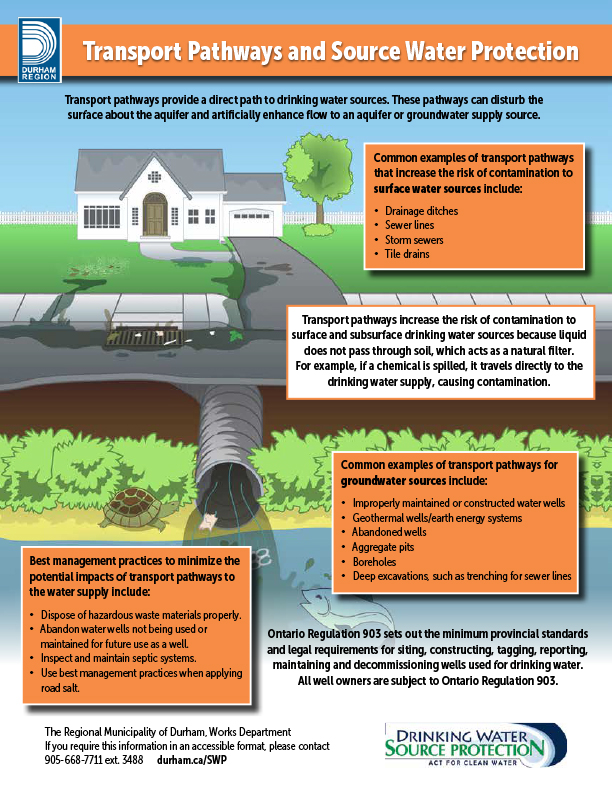 Transport Pathways and Source Water Protection
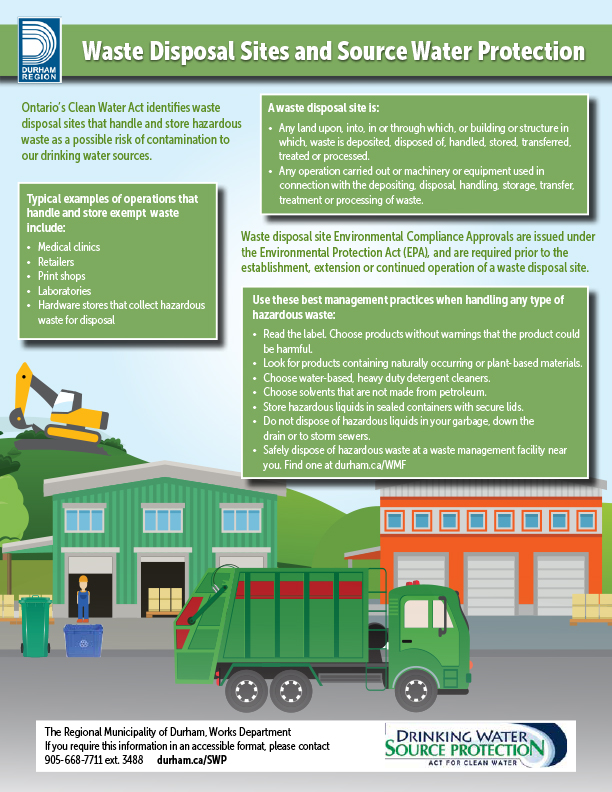 Waste Disposal Sites fact sheet
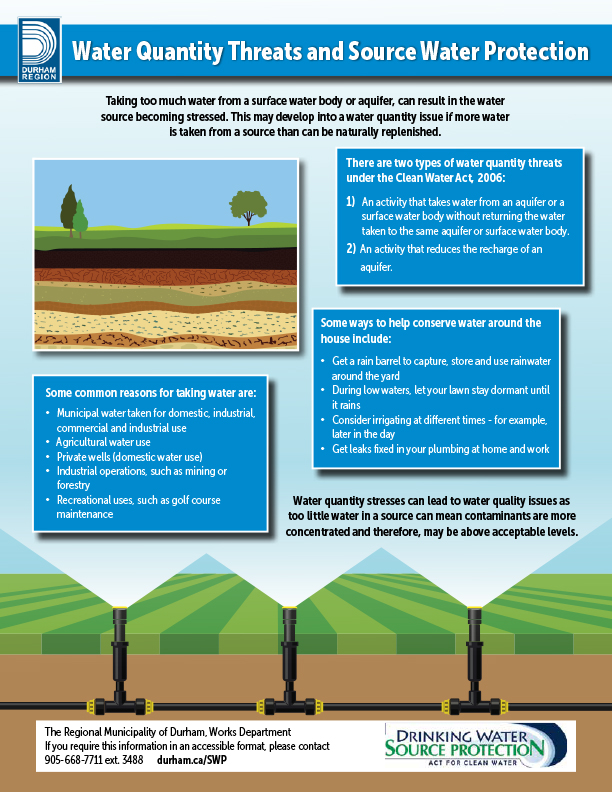 Water Quantity Threats fact sheet
- Don't pour chemicals down the drain.
- Throw out leftover chemicals and paints safely.
- Keep chemicals in a clean and dry place.
Source Water Protection
Durham Region is home to some of the best drinking water in the world. It’s important to protect the surface water and groundwater that supplies the Region’s municipal drinking water systems. This is called source water protection. Learn more about protecting your drinking water at home or at work below.
The closer you are to a water source, the more you should do to protect it. It's as easy as carefully storing chemicals or using environmentally friendly products.
Handle and throw out hazardous waste properly
- Try environmentally friendly products.
- Replace household cleaners with green products.
- Use less pesticides, fertilizers, and de-icing salt.
Protect your own drinking water well
- Test and inspect your well water regularly.
- Keep chemicals away from your well.
- Read the Well Aware booklet.
Maintain your private sewage system
- Pump and check your septic tank often.
- Don't release water softener backwash to your sewage system, unless it is designed for it.
- Understand your septic system with Septic Smart.
Don't overuse fertilizer and pesticides
- Use environmentally-friendly options.
- Follow the product label when using these products.
- If you're a farmer, create a nutrient management plan.
- Use less de-icing salt.
- Contractors should take Smart About Salt training.
- Store salt somewhere dry and covered.
Vulnerable areas
A vulnerable area is one near a drinking water source. There are Wellhead Protection Areas around local wells and Intake Protection Zones near surface water intakes. To find out if your property is in a vulnerable area use the Source Water Protection Information Atlas.
Is your development proposal in a Wellhead Protection Area?
If your property or building proposal is in a vulnerable area, it may have to follow a source protection plan. There is more information on the plans here: