Pedestrian safety concerns all road users. When a collision involves a vehicle and a pedestrian, it is the pedestrian who most likely suffers, often with tragic results. It can be difficult for a motorist to avoid an unexpected pedestrian in the roadway, especially at night or during inclement weather.
It is the responsibility of both driver and pedestrian to ensure the safety of each other by following some simple rules:
- Be smart by always crossing at an intersection where there is a traffic control device, such as a traffic control signal or a stop sign.
- Be sure that drivers see you by making eye contact with motorists before attempting to cross a road.
- Be alert by not wearing headphones or using your phone or other devices when crossing the road.
- Be careful by not attempting to cross until traffic has come to a complete stop.
If you are the driver, pay special attention to crosswalks and the sidewalks leading to the intersection when you approach, even if you have a green light.
All motorists including cyclists must stop and yield the whole roadway at pedestrian crossovers, school crossings and other crossing locations where a crossing guard is present. Only when all pedestrians and the crossing guards have crossed and are safely on the sidewalk may drivers and cyclists proceed.
- Must come to a complete stop to comply with the "stop for pedestrians" sign, proceed with caution and watch for pedestrians and cyclists.
- Must remain stopped until pedestrians have completely stepped onto the opposite sidewalk. Driver must yield the whole roadway to pedestrians.
- Must yield to vehicles after passing the crosswalk and only merge when safe to do so.
- If a pedestrian is waiting to cross, drivers must make a complete stop to let pedestrians cross safely.
- Look both ways, make eye contact with drivers to ensure vehicles clearly see you, and indicate that you want to cross.
- If a vehicle is too close to safely stop, allow the vehicle to proceed before entering the crosswalk.
- Only cross when it is safe to do so.
- Cyclists face the same responsibilities and fines as drivers. They must stop and yield at pedestrian crossovers when riding through crossovers.
- When crossing with pedestrians, follow rules for pedestrians: dismount and walk your bike across the road.
Crossing at a traffic signal
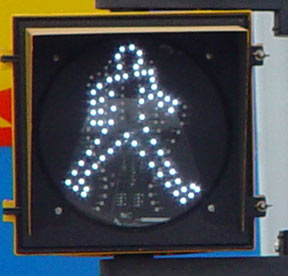 When crossing at a traffic control signal, cross once the walk signal is indicated.
To activate the walk signal you may have to press the pedestrian push button. If there is no push button, the walk signal will automatically indicate the walk signal. At some rural intersections, pedestrian signals may not be provided so use caution and cross during the green light making sure that all drivers see you.
If you have not completed your crossing and the flashing don't walk signal begins, continue your crossing as this is a warning to inform you that the light is going to change to the don't walk signal shortly. If you have not started to cross the road and the pedestrian signal head indicates the flashing don't walk signal, do not begin to cross as you do not have enough time to cross the intersection safely.
If you are crossing at a traffic light and there are no pedestrian signal heads, cross at the beginning of the green light. Do not cross once the signal changes to amber (yellow) and never cross against a red light.
Take extra caution when crossing in the dark Motorists have more difficulty seeing pedestrians in the dark, especially if they're wearing dark-coloured clothing. Wearing bright colours and reflective clothing is always a good idea in order to be seen when walking or cycling in the dark.
Intersection pedestrian signal
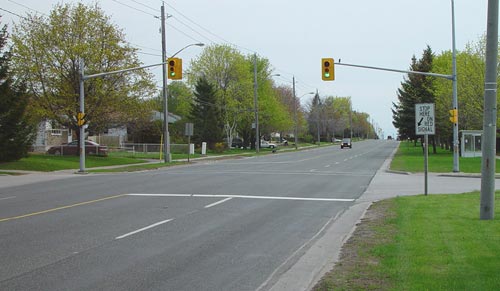 Where a greater level of control for pedestrian road crossing is required but a full traffic control signal is not, an Intersection Pedestrian Signal is an option.
An intersection pedestrian signal is a type of traffic control signal which instruct motorists to pay attention to the red signal indication and stop for pedestrians until the signal indication changes to green. On side streets, which are controlled by stop signs, motorists must treat an intersection pedestrian signal as they would any intersection by yielding right-of-way to the main street vehicle and pedestrian traffic.
Similar to intersection traffic control signals, certain criteria must be met before an intersection pedestrian signal is installed.
Crosswalks and pedestrian signals
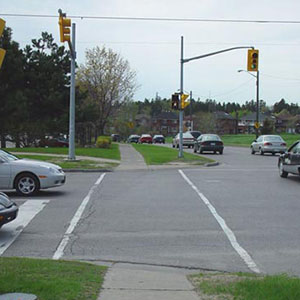 At signalized intersections and intersection pedestrian signals, there are painted crosswalks for pedestrians to walk in.
Pedestrian signals are provided at the far side of the crosswalk to inform pedestrians when it is permissible to cross, that is, when pedestrians have the right-of-way. Although pedestrians may have the right-of-way, caution should always be used when crossing a road.
Pedestrian push-buttons are provided for certain pedestrian crossings.
Once the pedestrian push-button is activated, the signal will provide the opportunity for the pedestrian to cross. A pedestrian or vehicle may have to wait depending upon the time of day and how the signal is operating. It is important to be patient and wait to cross only when the walk signal is indicated.
If there is no pedestrian push button, the walk signal will indicate automatically every cycle; this usually occurs at busy intersections or at intersections with high pedestrian activity.
Pedestrian crossovers
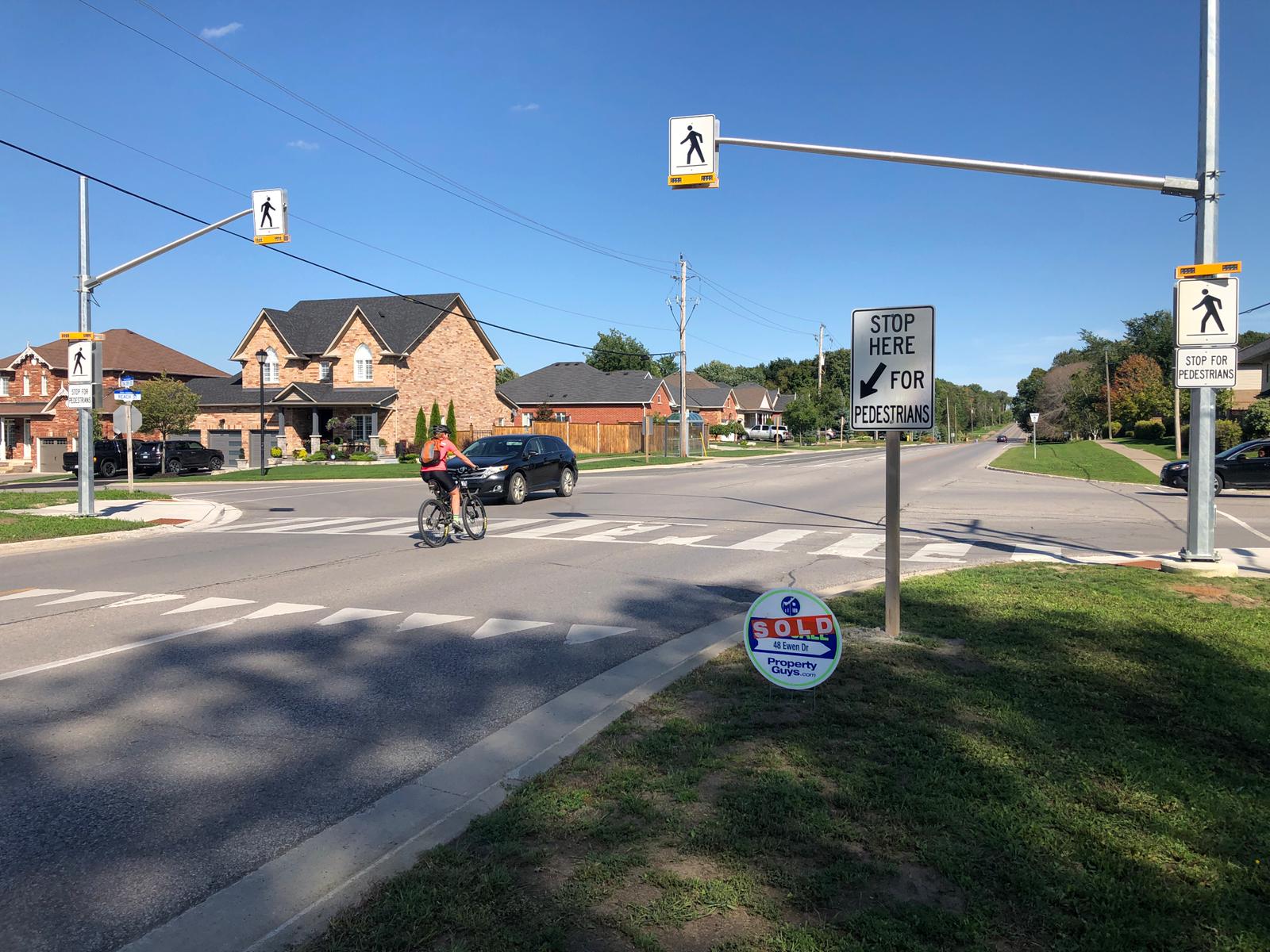 Pedestrian crossovers are a new way for pedestrians to easily and safely cross the road. By law, drivers and cyclists must stop and yield to pedestrians intending to cross the road, and wait for them to completely reach the other side before driving ahead.
Pedestrian crossovers have special ladder-style stripes that mark the crosswalk and marked yield bars showing where drivers must stop. Some crossovers have flashing lights that are activated by pedestrian push buttons. Signs are also present telling drivers to stop for pedestrians.
If there is a push button, press the pedestrian push button and cross when all vehicles (including cyclists) have come to a complete stop. If a push button is not present, be sure to make eye contact with motorists before stepping into the crossover. Motorists must come to a complete stop when signals are flashing or when pedestrians are within the crossover. Drivers must not proceed until the signals have stopped flashing or until pedestrians are no longer in the crossover.

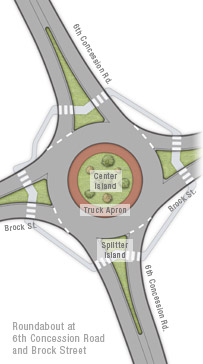 Unlike intersections controlled by traffic signals, motorists approaching a roundabout must yield the right-of-way to oncoming traffic and merge into the circle when it is safe to do so. Collisions that result in serious injury or fatalities from right angle impacts are significantly reduced with a roundabout.
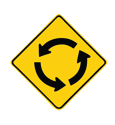 Roundabout ahead. Time to slow down.
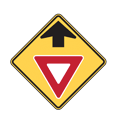 Yield sign ahead.
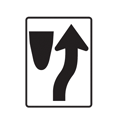 Stay to the right of the splitter when approaching the roundabout.
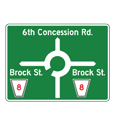 Guide signs near the entry show the correct exit to take.
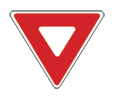 Yield to traffic on your left before entering the roundabout.
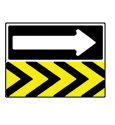 All traffic within the roundabout travels one-way.
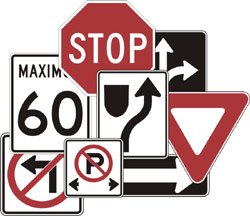 Regulatory signs are signs that inform the road user of things they must do or not do. These signs indicate traffic regulations which apply all the time or at specific times. Examples are stop signs, speed limit signs, one way traffic signs, turn prohibitions and parking regulation signs. These signs typically have a white background with a black message except the stop and yield signs which have red and white colours and the unique octagon or triangle shapes.
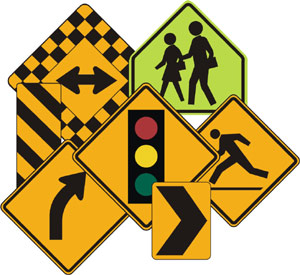 Warning signs provide advance warning of potentially hazardous conditions. Examples include curve and intersection warnings, stop signs or traffic signals ahead notice, and playground or school area warning signs. These signs typically have a yellow diamond or rectangular shape with a black message.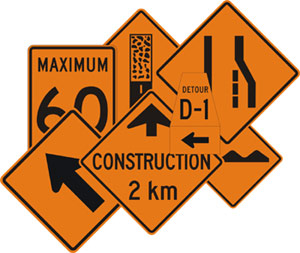
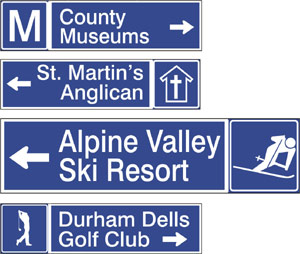 interest and other services or facilities that may be required or of interest to travellers.
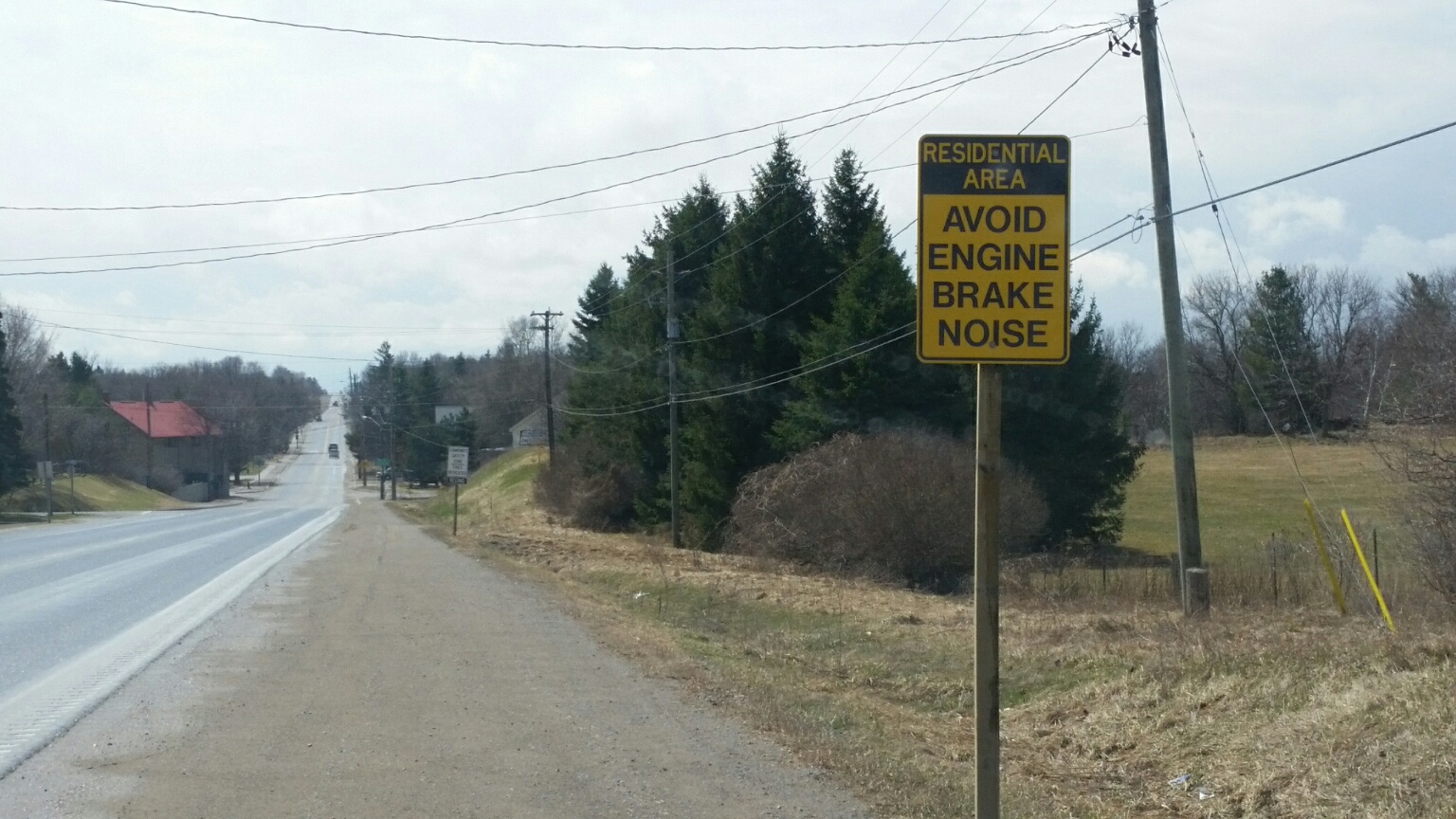 signs that are used to notify the truck drivers to refrain from producing unnecessary noise upon entry into an urban area. These signs will be provided where suitable conditions exist, and traffic observations support their use. Requests for this type of sign can be made using our
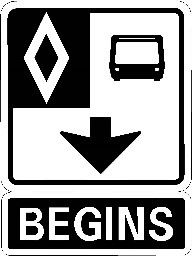 Overhead sign: bus-only lanes begin.
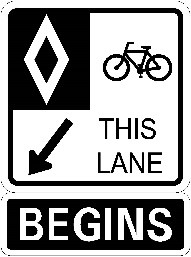 Overhead sign: bicycle-only lanes begin.
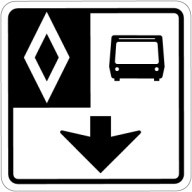 Overhead sign: lane reserved for buses only.
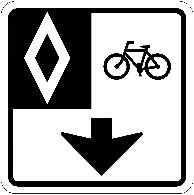 Overhead sign: lane reserved for bicycles only.
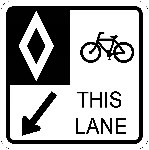 Ground-mounted sign: lane reserved for bicycles only.
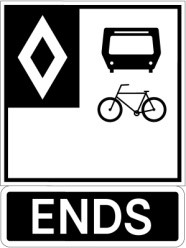 Overhead sign: bus-only and bicycle-only lanes are ending.
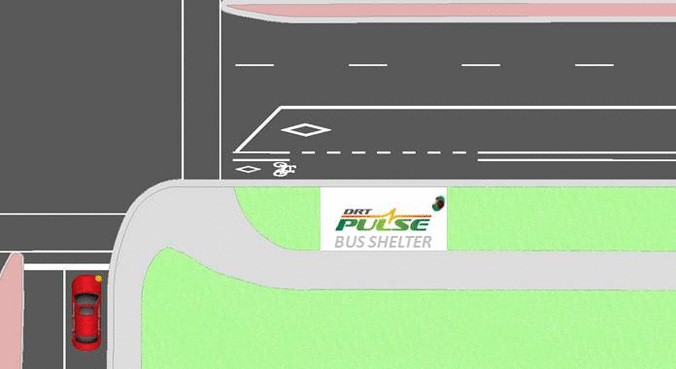
 Pavement marking: bus-only reserved lanes.
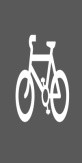 Pavement marking: Bicycle-only lanes.