Child Safety

Supervision is the best way to prevent child injuries

Here is what supervision looks like:

  • Stay close to your child and check on them.
  • Look closely for things that could hurt your child at home.
  • Remove your child from danger.
  • Give your child something to do that will keep them busy when you have something to do nearby.

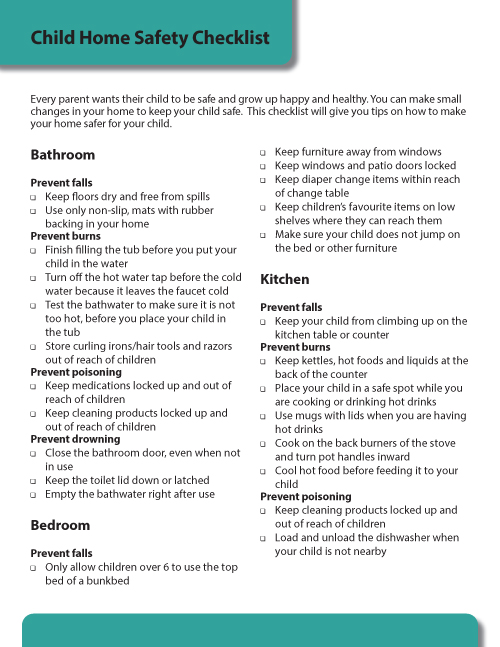
Every parent wants their child to be safe and grow up happy and healthy. Children birth to four years grow and develop new skills constantly. They love to explore, but are not able to understand or recognize dangers that can cause them to be injured. Understanding the normal stages that a child learns new skills will help you to make changes to your home before your child is at risk. For more information visit our Child Development page.


Falls are one of the top reasons children up to age four end up in the hospital

When children are young, most falls happen in the home and as they get older falls happen most often at the playground.

  • Always supervise your child.
  • Get on the ground and look at the surroundings from a child’s eye to identify hazards.
  • Make sure your child is always buckled into their high chair or stroller.
  • Ensure car seats or carriers are not placed on top of furniture.
  • Place a hand on your child when they are on a surface such as a changing table.
  • Never use walkers that have wheels (banned in Canada).
  • Install gates on the top and bottom of your stairs.
  • Ensure furniture is away from windows and balcony door handles.
  • Install window locks.
  • Remove tripping hazards.

Watch this video to learn more about how to prevent falls in the home.

Visit Parachute Canada for additional ways to prevent injuries at home.

  • Always supervise your child.
  • Ensure your child plays on age-appropriate equipment.
  • Make sure handrails, barriers and railings are secure.
  • Ensure surfaces are deep and soft.

Visit Parachute Canada for additional ways to prevent injuries at playgrounds.

Call 911 in an emergency

  • Get a first aid kit, know where it is and how to use it.
  • Take a course in first aid and CPR.

Have important contacts:

For information on other child safety topics including burns, poisoning and drowning visit Parachute Canada.