Extreme Heat and Humidity

Current heat status

Heat Warning and Information System (HWIS)

The Durham Region HWIS can reduce heat-related illnesses during extreme heat events by alerting the public about extreme heat events, directing community response and outreach to vulnerable and priority populations, and providing individuals with information on how to prevent heat-related illnesses.

Community partners: Subscribe to environmental health hazards notifications

Gauge showing no heat warning in effect for Durham Region

No Heat Warning

Heat and health

Extreme heat and humidity puts everyone at risk of heat-related illnesses. It is important to protect yourself and your family during extreme heat events.

  • Your age and health may make you more susceptible to heat related illness.
  • You can become ill while being active during extreme heat. Try to reschedule or plan outdoor activities during cooler parts of the day.
  • Remember to frequently call, text or video call and check in with neighbours, friends and older family members, especially those who are chronically ill, to ensure that they are cool and hydrated.

Never leave people or pets inside a parked vehicle on warm days. Anyone seeing a child left unattended in a hot vehicle at anytime should call 911 immediately.

Gauge showing no heat warning in effect for Durham Region

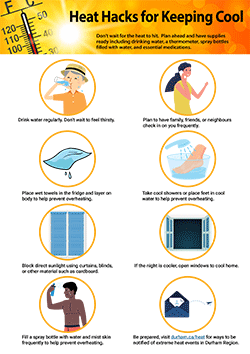
Heat hacks for keeping cool

Gauge showing no heat warning in effect for Durham Region

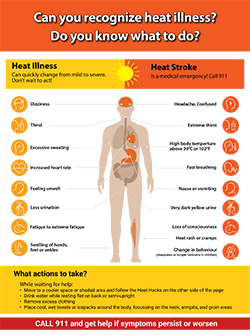
Can you recognize heat illness?

Symptoms of heat illness:

  • Heat edema (swelling of hands, feet, and ankles).
  • Dizziness or fainting.
  • Nausea or vomiting.
  • Headache.
  • Fast breathing and heartbeat.
  • Extreme thirst.
  • Less urination and very dark yellow urine.
  • Changes in behaviour (sleepiness or temper tantrums in children)

Common heat illnesses:

  • Heat edema (swelling of hands, feet, and ankles).
  • Heat rash.
  • Heat cramps.
  • Heat fainting.
  • Heat exhaustion.
  • Heat stroke.

Heat stroke

Heat stroke is a medical emergency. If you or someone else is having a heat stroke, call 911.

Heat stroke symptoms:

  • High body temperature above 39°C or 102°F.
  • Unconscious.
  • Confused.
  • Not sweating.
  • Signs of heat illness.
  • Low, dark urine output.

While waiting for medical help, you should:

  • Move yourself or the person to a cool place, if possible.
  • Have the person rest flat on back or semi-upright position and offer water.
  • Remove excess clothing.
  • Place cool wet towels or icepacks around the body, focussing on the neck, armpits, and groin areas.
  • Use a fan on yourself or the person.

Your body cools down by sweating. Your sweat cools your body as it evaporates. The weather affects how you stay cool. If it's windy, sweat evaporates faster, which helps to cool you faster. High humidity slows your body's ability to cool down.

If you are feeling any of these symptoms in hot weather, you should:

  • Move to a cool place such as an air-conditioned room or under some shade.
  • Drink sips of water.
  • Cool off by removing excess clothing, taking a cool shower or using a fan.
  • Place cool wet towels, clothing or icepacks around the body, focussing on the neck, armpits, and groin areas.

If the above cooling tips do not make you feel better, seek emergency help or call 911.

Extreme heat affects everyone.

You are at greater risk if you:*

  • Are 60-years of age or older.
  • Are an infant or child.
  • Are pregnant.
  • Have an existing illness, including substance use challenges.
  • Take medications that affect hydration or temperature regulation.
  • Have limited resources, such as a low income.
  • Are socially isolated or live alone.
  • Have developmental, cognitive or mental health challenges.
  • Have limited physical mobility.
  • Work outside.
  • Exercise outside.
  • Lack secure housing.

*Having multiple risk factors means potentially higher health risks and the need for close monitoring during heat events.

You can protect yourself and try to prevent heat and humidity related illnesses by:

Reducing your body temperature during a heat event

  • Remove excess layers of clothing.
  • Drink water regularly. Don't wait to feel thirsty.
  • Place damp towels in fridge and layer on body.
  • Take cool showers or place feet in cool water.
  • Fill a spray bottle with water and mist skin frequently.
  • Rest and limit physical activity.

Additional precautions

  • Check weather forecasts for hot weather and Environment and Climate Change Canada for heat warnings.
  • Check if your air conditioner works before hot weather starts.
  • Make your home cooler by planting trees for more shade.
  • If you have no air conditioner, find a place to cool off during hot weather.
  • If you take medication, check with your doctor to find out how extreme heat may affect you.
  • If you have no air conditioning or have a medical condition, then plan to have family, friends, and neighbours call and check in on hot days to make sure you are okay.
  • Stay hydrated by drinking lots of fluids, especially water.
  • Wear loose fitting clothing while outside.
  • Cover exposed skin when out in the sun.
  • Wear a wide-brimmed hat when in the sun.
  • Wear sunglasses with UVA and UVB protection for your eyes.
  • Use an umbrella for shade.
  • Use a sunscreen with SPF30 or higher.
  • As a last resort, seek shade as it can reduce the temperature outside by 5°C.
  • Schedule your outdoor time during cooler times of day (morning and night).
  • Check the Air Quality Health Index as air pollution can be higher during very hot days.
  • Reschedule your plans for a cooler day or choose a location with shade or air conditioning near you.
If you must work outside or do physical activity in extreme heat, take extra precautions:
  • Take extra breaks.
  • Drink lots of water.
  • Wear less gear, if possible.

There are ways to keep your home cool even without an air conditioner:

  • Move to the coolest room possible.
  • Turn off heat-generating devices such as electronics, appliances, and lights.
  • Try cooking outside instead of using the stove or oven.
  • Block direct sunlight using curtains, blinds, or other material such as cardboard.
  • If the night is cooler, open windows to cool home.

Use your air conditioner. If you are using a window air conditioner, cool the one room you will use for a heat break.

If your home is extremely hot:

  • Take cool showers.
  • Use a fan.
  • Visit a place with shade, a pool, or an air-conditioned space.

If you do not have air conditioning, these important steps can help you to keep safe and stay cool during extreme heat:

  • Place wet towels in the fridge and layer on body to help prevent overheating.
  • Take cool showers or place feet in cool water to help prevent overheating.
  • Fill a spray bottle with water and mist skin frequently to help prevent overheating.
  • Plan to have family, friends, and neighbours call and check in, to make sure you are okay.
  • Drink water regularly. Don't wait to feel thirsty.
  • Rest and limit physical activity.
  • Consider visiting an indoor public facility such as a library, recreation centre or mall.

Community partners

Durham Region Health Department gives local municipalities and community partners notification of environmental health hazards such as heat warnings, cold warnings, and poor air quality, as they provide services for those who are more at-risk in our communities. Use the button below to send us an email with "subscribe" in the subject line.

Community partners: Subscribe to environmental health hazards notifications


Durham Region residents

Sign up to receive email updates on this web page to have heat alerts notifications sent directly to your inbox.

Sign up to receive email updates

The Heat Warning and Information System (HWIS)

We can prevent heat-related illness with warnings and proper action.

The HWIS program can reduce heat-related illness during hot and humid weather by:

  • Notifying you of extreme heat events.
  • Helping to inform community response.
  • Telling you how you can prevent heat-related illnesses.
  • Communicating heat warnings to local municipalities and communities.
  • Raising awareness about heat-related illness.
  • Promoting protective actions to take before and during heat events.
  • Finding and supporting community partners who work with those at high risk of heat and heat-related sickness.
  • Working with local communities to improve and support their heat response plans.

Environment and Climate Change Canada provides notification to the Health Department when weather forecasts indicate a heat event in our area.


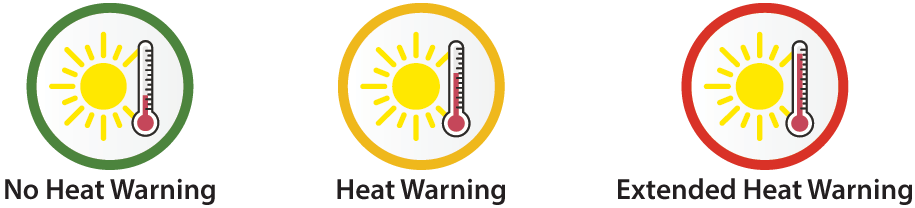
The HWIS program notifies community partners and the public about heat warnings and extended heat warnings.


Heat warnings (lasts two days)

Temperatures are expected to be at least 31°C during the day and overnight temperatures are at least 20°C or Humidex is at least 40.

Extended heat warnings (lasts three or more days)

Temperatures are expected to be at least 31°C during the day and overnight temperatures are at least 20°C or Humidex is at least 40.

These images tell you what the current heat warning status is in Durham Region.

Pictures of the various heat warning level gauges

Visit Environment and Climate Change Canada's website for more weather information.