
Air Quality

Radon

Radon gas is a product of uranium breaking down in soil and rock. Radon gas can enter a building structure through openings such as cracks in the foundations, construction joints, gaps around pipes, sump pumps and drains. In indoor air, radon gas can build up to levels that can pose a health risk. In outdoor air, it is diluted to levels that do not pose a health concern.

Radon is the number one cause of lung cancer in non-smokers. According to Health Canada, more than 3000 Canadians die every year from radon-induced lung cancer.

Facts about radon

What is radon?

Health Canada information

It is important for every homeowner to test their home for radon, regardless of where they live. Radon levels can vary, even between homes on the same street. Since radon has no colour, odour, or taste, the only way to know your exposure level is to test for radon.

Radon is easy to test for and kits are available online and in stores. To get a more accurate picture of radon levels in your home, test for a minimum of three months over the winter, when you are less likely to have open windows.
Learn more about radon testing

Buy an approved radon test kit online


Indoor air quality

On average, Canadians spend 90 per cent of their time indoors. This is why maintaining good indoor air quality is so important for maintaining good health. Many factors can impact indoor air quality including mould, excess moisture and fuel-burning appliances, as well as activities such as smoking indoors and idling vehicles in attached garages.

The best way to improve indoor air quality is to remove or reduce indoor air pollutants at the source.


Air quality alerts

The Ontario Ministry of Environment, Conservation, and Parks, in conjunction with Environment and Climate Change Canada, issue Special Air Quality Statements (SAQS) and Air Quality Warnings (AQW).

Learn more about air quality alerts

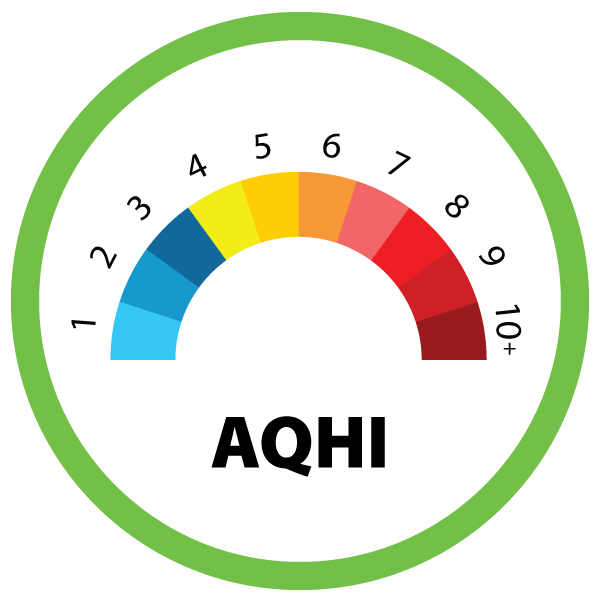
Air Quality Health Index iconAir Quality Health Index

Community partners

Durham Region Health Department gives local municipalities and community partners notification of environmental health hazards such as heat warnings, cold warnings, and poor air quality, as they provide services for those who are more at-risk in our communities. Use the button below to send us an email with "subscribe" in the subject line.

Community partners: Subscribe to environmental health hazards notifications


Outdoor air quality

Protect yourself by planning outdoor activities during times when air quality is good.

Follow your local air quality forecasts through the Air Quality Health Index (AQHI).

Subscribe to receive air quality alerts by email

The AQHI is a tool that helps us understand our local air quality and what it means to our health. It measures common air pollutants known to cause health problems and provides a AQHI rating from 1 to 10, depending on the potential health risk of the air pollution level.

The higher the AQHI, the greater the health risk.

Before heading outdoors, check your local AQHI forecast.

A summary of air quality health messages by category
Health riskAir Quality Health IndexAt risk population*General population
Low risk1-3Enjoy your usual outdoor activities.Ideal air quality for outdoor activities.
Moderate risk4-6Consider reducing or rescheduling strenuous activities outdoors if you are experiencing symptoms.No need to modify your usual outdoor activities unless you experience symptoms such as coughing and throat irritation.
High risk7-10Reduce or reschedule strenuous activities outdoors. Children and the elderly should also take it easy.Consider reducing or rescheduling strenuous activities outdoors if you experience symptoms such as coughing and throat irritation.
Very high riskAbove 10Avoid strenuous activities outdoors. Children and the elderly should also avoid outdoor physical exertion.Reduce or reschedule strenuous activities outdoors if you experience symptoms such as coughing and throat irritation.

*Unsure if you are at risk? Consult this health guide to help you determine if you are at risk from air pollution. People with heart or breathing problems are at greater risk. Follow your doctor's usual advice about exercising and managing your condition.

The Ontario Ministry of the Environment, Conservation and Parks and Environment and Climate Change Canada, issues the following alerts:

  • Special Air Quality Statement (SAQS): A SAQS will be issued when the AQHI is forecast to reach the high risk category (an AQHI of 7 or greater).
  • Air Quality Warning (AQW): An AQW will be issued when the AQHI is forecast to reach, or has reached, the very high risk category (AQHI of 10+) due to wildfire smoke.
  • Termination Notice: A termination notice is issued once the air quality alert has ended.
  • Frequently asked questions

Subscribe to the Ontario Ministry of the Environment, Conservation and Parks air quality alerts


Wildfires and air quality

Wildfire smoke can be harmful to everyone’s health even at low concentrations. Everyone can take action to reduce their exposure to wildfire smoke. Be sure to check on people in your care and those around you who may be more susceptible to smoke.

  • Older adults
  • Indigenous Peoples
  • People living in rural and remote areas
  • Pregnant people
  • People who smoke
  • Infants and young children
  • People who work outdoors
  • People involved in strenuous outdoor exercise
  • People living in situations of lower socio-economic status, such as:
    • those with lower income
    • those with lower education
    • those experiencing housing insecurity
    • those experiencing uncertain employment
  • People with an existing illness or chronic health conditions, such as:
    • cancer
    • diabetes
    • lung or heart conditions
  • Speak with your health care provider about developing a management plan for wildfire smoke events and maintain a supply of necessary medications at home; always carry these medications with you during wildfire season.
  • At-risk populations should stay indoors if they have conditions that could be exacerbated from wildfire smoke.
  • Stop or reduce your activity level if breathing becomes uncomfortable or you or someone in your care feel unwell.
  • Contact your health care provider or local health authority if you develop severe symptoms or need advice.

  • Keep windows and doors closed if the temperature in your home is comfortable.
  • Consult with an HVAC professional on optimizing your system and its filtration capabilities (using the highest rated filter that the HVAC system can handle).
  • Use a clean, good quality air filter in your ventilation system based on the manufacturer's recommendations.
  • Use recirculation settings on your HVAC system to prevent smoke from entering.
  • You may choose to use an air purifier that uses HEPA filtration to remove smoke from your home/workplace.
  • Take a break from the smoke at a location in your community where you can find clean, cool air such as community centres, libraries, and shopping malls.
  • Drink plenty of water to help your body cope with the smoke.
  • If you must spend time outdoors, a well-fitted respirator type mask (such as a NIOSH certified N95 or equivalent respirator) that does not allow air to pass through small openings between the mask and face, can help reduce your exposure to the fine particles in smoke. These fine particles generally pose the greatest risk to health. However, respirators do not reduce exposure to the gases in wildfire smoke. It is important to listen to your body and reduce or stop activities if you are experiencing symptoms.
  • If working outdoors, consult with your supervisor or occupational health and safety representative for information on working safely outdoors.

If you must spend time outdoors, a well-fitted respirator type mask (such as a NIOSH certified N95 or equivalent respirator) that does not allow air to pass through small openings between the mask and face, can help reduce your exposure to the fine particles in smoke. These fine particles generally pose the greatest risk to health.

  • Respirators do not reduce exposure to the gases in wildfire smoke.
  • If you must remove your respirator, try to move to an area with cleaner air before removing it.
  • It is important to listen to your body and reduce or stop activities if you are experiencing symptoms.
  • Respirators should not be used by:
    • Children under the age of two.
    • Individuals who have trouble breathing while wearing a respirator.
    • Individuals who have difficulty (putting on or) removing a respirator.

Milder and more common symptoms of smoke exposure include:

  • Headaches
  • A mild cough
  • Production of phlegm
  • Sore and watery eyes
  • Nose, throat, and sinus irritation

You can typically manage these symptoms without medical intervention.

More serious symptoms of smoke exposure include:

  • Dizziness
  • Chest pains
  • Severe cough
  • Shortness of breath
  • Wheezing (including asthma attacks)
  • Heart palpitations (irregular heart beat)

Exposure to wildfire smoke can exacerbate existing lung and heart diseases, including:

  • Asthma
  • Chronic obstructive pulmonary disease
  • Congestive heart failure

Less commonly, exposure to wildfire smoke can lead to:

  • Stroke
  • Heart attack
  • Premature death

If you have any of these symptoms, talk to a health care provider or seek urgent medical attention. If you think you are having a medical emergency, dial 911 and seek immediate medical assistance.