
Child Development
Do you have questions about early childhood?
Learn more about children meeting milestones, the 18-month well baby visit, toilet learning, getting ready for preschool and big school, tips for keeping your child safe and how to positively manage behaviours.
 Meeting milestones
 18-month well-baby visit
 Toilet learning
 Get ready for school
 Your child's safety
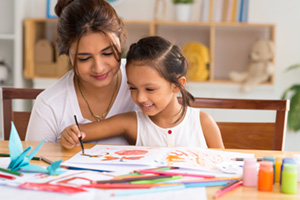 Parenting positively
Meeting milestones
Children learn new things at different ages. Taking a first step, speaking in short sentences, and playing with others, are examples of developmental milestones.
- Early child development usually follows an order. A child may need to learn one skill (for example, crawling) before being able to begin mastering a new skill (for example, walking).
- At each developmental stage, serve-and-return interactions promote a child’s growth and development. By providing positive feedback with eye contact, sound, words, and physical interaction (returns) to your child’s verbal cues and actions (serves), you help spark your child’s interest and enthusiasm in practicing things like speech, language and social learning.
- Every child grows at a unique pace and your child’s development may be slower or faster than others. The important thing to focus on is that they are making progress.
- Parents and caregivers are in great position to observe how their child is developing.
- There are many types of developmental checklists, also known as screening tools, that can help you to track the progress of your child’s development.
- It is important that parents and caregivers discuss any concerns or questions they may have about their child’s growth and development with their primary health care provider.
- Early identification of developmental delays, or identification of a child who may be at risk of developmental delays, is important in preventing further delays and promoting the best outcomes for their child’s growth and development.
Here are some examples of development milestones for ages 15 months to 5 years of age.
For activities you can do, refer to the guide for 15-month-old children.
For activities you can do refer to the guide for 18-month-old children.
For activities you can do, refer to the guide for 2-year-old children.
For activities you can do, refer to the guide for 3-year-old children.
For activities you can do, refer to the guide for 4-year-old children.
For activities you can do, refer to the guide for 5-year-old children.
If you have any questions about your child's development, talk to your health care provider or contact the Health Department’s Infant and Child Development program.
Our Infant and Child Development program works with families to promote the development of young children who are at risk for or have developmental concerns.
The program supports families to identify and plan developmental goals that are consistent with their culture, values, priorities, strengths, and preferences. The program partners with families to help achieve these goals as part of their daily routines.
Learn more about our Infant and Child Development program.
Vision screening is an important part of your child’s visual health.
- Vision screening can identify children with eye abnormalities or blurred vision. If left untreated, these problems may impact their learning and performance in school.
- It is recommended that all children see an optometrist for an eye exam. A yearly eye exam is free for children up to 19-years old with a valid Ontario Health Insurance Plan (OHIP) card.
- Speak to your child's Health Care Provider if you have any concerns about your child's eyes or vision.
Your child likely had a hearing test after birth.
If your baby is over the age of seven months and you would like their hearing tested, you can call Grandview Children's Centre at 905-728-1673 or 1-800-304-6180 extension 0 to request an appointment with an audiologist, or you can complete an online self referral.
18-month well-baby visit
18 months is a milestone in your child's development, and the last regular check-up before your child starts school.
Before your child turns 18 months old, it is important to plan a visit to a family doctor or other health care provider and take the time you need to:
- Ask questions about your child's physical, emotional, and social development.
- Learn about community supports and services.
- Get a regular check-up.
- Get caught up on your child's immunizations.
The enhanced 18-month check-up is a key appointment for immunization and is often the last regular check-up before your child starts school.
Your health care provider will discuss your child's development.
Your health care provider may also share information on community resources that promote healthy learning and reading and age-appropriate play such as EarlyON child and family centres, local libraries, recreation centres and Ready, Set, Grow Check-Ups.
For more information, check out this fact sheet about your child's Enhanced 18-Month Well-Baby Visit.
Toilet learning
Children will learn to use the toilet when they are ready. Toilet learning can take time.
Most children reach this milestone between two and four-years old, but every child develops at their own pace. Be patient because it may take three to six months, or more, before your child is not wearing diapers anymore.
Toilet learning is:
- The child learning to recognize when they have to pee or poo.
- Communicating what is about to happen and asking for help if needed.
- Controlling the urge until they are seated on the potty/toilet.
Knowing when your child is ready
You can help your child learn to use the toilet by knowing when they are ready. Some signs that your child may be ready for toilet learning include:
- Walk to the potty and sit on it without help.
- Pull their pants up and down on their own.
- Have a dry diaper for one to two hours at a time.
- Tell someone when they need to use the potty.
Your child may be ready to start toilet learning if they are:
- Interested in the potty.
- Willing to stop what they’re doing to use the potty.
- Motivated to do things on their own.
- Eager to please parents and caregivers.
If toilet learning does not work at first, it might be that the child isn’t ready. Don’t be disappointed or upset, take a break, and try again in a few months.
It is not a good idea to start potty training when significant changes are happening in a child’s life such as a move, a new baby, starting or changing child care.
Read our quick tips handout, which is available in English and French, or our toilet learning guide book for more readiness signs and tips to help your child with toilet learning.
Getting ready for school
- Preschool age children want to become more independent, build relationships with peers and can follow directions and routines. Parents and caregivers can have a positive impact on a child’s readiness for school.
- Whether your child is starting preschool or big school, you can play an active role in their school readiness.
The 1 ,2, 3 Get Set for Kindergarten resource is available in English and French and can help you get your child ready to learn and off to a healthy start at school. It includes information about healthy habits that will support learning along the way.
Helpful resources to get ready for school
- 98-Ways-To-Say-Very-Good
- Connecting with Your Preschooler
- Healthy Sleep Healthy Me
- Toilet Learning Tips English | French
- Toilet Training Guide
- Positive Discipline is in your hands
- How Are Your Feeling Activity Sheet English | French
Tips for Creating Healthy Routines is available in English and French will give you ideas on how to create healthy routines in your home and help your child get ready for preschool.
- Creating healthy routines for you and your child can help your family spend more time together, build your child’s confidence, knowledge and skills and enhance your child’s ability to learn.
- Healthy kids have more energy to be physically active and are better prepared to learn. Healthy food and drink choices, daily physical activity and proper sleep, will help children of all ages and abilities to build and maintain a healthy body and mind.
For children, part of being mentally healthy is being able to bounce back from challenges and learn from them. You play an important role in helping your child learn to deal with life’s stresses.
Learn more about building connections for resilient kids.
The Kids Can magazine provides tips and activities to help you promote your child’s positive mental health and resiliency as they transition to preschool.
Resilience is the ability to bounce back and stay strong when facing tough times. While it's best to start building resilience in childhood, anyone can develop it at any age. It’s not something people are born with—it’s a skill we can all learn with the right support.
Key factors that help build resilience include:
- Consistent routines and structure.
- Caring relationships with family, friends, and others.
- A strong sense of identity and ability to make decisions.
- Feeling connected to your community, culture, or school.
- Advocating for fairness and justice.
- Safe and supportive environments.
- Physical and financial stability.
Building connections for resilient kids starts with positive connections with caring adults. Adults, like parents, teachers, and community leaders, play an important role by providing consistent support and guidance. Resilience helps kids face challenges and grow stronger, no matter what life brings.
Your job as a parent is not to get rid of stress but to support your child in dealing with it. Stress is a normal part of everyday life, but too much stress can have negative impacts on the ability to focus, think and learn.
Signs that may indicate a child is experiencing stress may include:
- Recurring headaches, tummy aches or neck pain.
- Increased irritability, sadness, panic, anger.
- Being more quiet than usual.
- Trouble relaxing or sleeping.
- Change in sleep patterns.
- Excessive energy or restlessness.
- Trouble getting along with friends.
- Acting out (being aggressive or defying authority).
Make stressful situations teachable moments – let them know that their feelings are normal and guide them to express their feelings in ways that do not hurt themselves or others.
- Help your child deal with their feelings by being an example in the way that you express your feelings. Allow your child to say how they feel and let them know that you understand how they feel. Talk about good ways to deal with those feelings and remind them of past successes.
- Change happens (e.g., starting preschool or kindergarten) and children need support in preparing for change. The more skills your child has going into new situations the more confident they will be.
- You can help your child prepare for the change of starting school by trying to predict challenges that a child may face and brainstorm solutions to help your child tackle these challenges and develop positive coping skills.
- Involve your child in the steps leading up to a change. Find the positives in changes. For example, new friends they might meet at school.
- When children feel loved, valued, and supported they are better able to handle the challenges of growing up.
Connections with adults can help children build resilience. All adults have a role in helping children build resilience by making positive connections with them. Find more information on supporting children’s mental health.
The Early Development Instrument, or the EDI for short, is a questionnaire completed by kindergarten teachers in the second half of the school year that measures a child’s ability to meet age-appropriate developmental expectations in five general domains:
- Physical health and well-being
The child’s physical readiness for the school day (e.g., dressed appropriately for school activities, well rested), independence with activities like putting on their shoes and coat, and skills like holding a pencil, climbing stairs or cutting with scissors. - Social competence
Skills that a child develops to help them get along with others, and have positive relationships, confidence to try new things and awareness of appropriate behaviours. - Emotional maturity
The ability to think before acting and to deal with feelings at the age-appropriate level. It is also the ability to show empathy and consideration of other’s feelings. - Language and cognitive development
Age-appropriate reading, writing and numeracy skills. - Communication skills and general knowledge
Skills to communicate needs and wants in socially appropriate ways and age-appropriate knowledge about life and the world around them.
Watch this short video to learn more about the EDI
After teachers complete the EDI on each individual child in their class, the results are grouped together to give a snapshot of how children are doing across schools, neighbourhoods, cities, or even provinces and countries.
To see how children are doing in these five domains in Durham Region, check out Data in the Early Years - Region of Durham.
You are your child's first teacher, small and simple moments build your preschooler's brain for exploring and learning. Children with loving and involved parents or caregivers are more prepared for school and have better developed skills when they enter kindergarten.
Children will gain skills at their own pace. By bonding, playing and reading with your child, you will help your preschooler be better prepared for learning in school and in life.
Your child’s safety
Parents and caregivers want their child to be safe, happy and healthy. There are many things that you can do to prevent injuries and create a safe environment for your child to explore, grow and have fun.
Find helpful information about supervision, prevention of falls and injuries, burns, poisoning, drowning and growth and development in our our Keeping Kids Safe magazine.
Young children grow and change quickly. They develop physical skills that do not match their ability to judge risks, and they are naturally curious about their surroundings, putting them at an increased risk for injury.
For information on how you can prevent falls and injuries inside and outside of the home, visit our Child Safety page.
All car seats sold in Canada must meet the Canadian Motor Vehicle Safety Standards (CMVSS).
- All car seats sold in Canada must meet the Canadian Motor Vehicle Safety Standards (CMVSS) and all car seats have an expiry date.
- Follow your car’s manual for car seat specifications and requirements for installing a car seat.
Visit our Car Seat Safety and Booster Seats page.
Never let young children stay in the sun for long periods, even when wearing sunscreen. Both adults and children’s skin can sunburn in only 15 minutes depending on the UV index value. The sun’s UVB rays are strongest between 11 a.m. and 3 p.m. and it is also usually the hottest time of day. Unless the child is protected, keep them out of the sun during these hours.
- Check daily UV index before outdoor activities. The UV Index tells you the strength of the sun’s daily UV rays - the higher the number, the stronger the sun’s rays and the more important it is to protect yourself.
- On hot days, ensure you have access to water to stay hydrated. Carry a reusable water bottle with you on your outings.
- Wear a wide-brimmed hat or baseball cap with flaps that cover the head, neck and ears.
- Wear light coloured and breathable clothing that cover as much skin as possible, or UV protective clothing.
- Put sunscreen on at least 20 minutes before going outside.
- Apply plenty of broad-spectrum, water-resistant sunscreen and lip balm with an SPF of 30 or more; re-apply when needed, especially after swimming, sweating or toweling.
Visit our Sun Safety and Tanning page.
Parenting positively and managing behaviour
Behaviour looks different for each child at every age. Building a healthy attachment with your child can help navigate challenging behaviours and support your child’s emotional well-being.
Parenting positively means encouraging, teaching and guiding children towards understanding what behaviour is okay and what behaviour is not okay. Using positive discipline will teach your child how to behave and grow into a healthy, caring person. Your child will also learn how to behave by watching you. It is important to be a good role model in your actions, behaviours and words.
Read more about positive discipline in our Positive Discipline Guide for Parents and Caregivers.
Challenging behaviour can be stressful and frustrating for both you and your child. A child may engage in challenging behaviour for a variety of reasons. Once you understand the reason behind the behaviour, you can teach new appropriate ways to help your child express themselves and learn ways to prevent the negative behaviours from happening again in the future.
If you have questions or concerns about your child’s development and/or their behaviour, speak to your health care provider and visit our Children’s Developmental and Behavioural Supports page.
For more information visit our Parenting Your Child and Positive Parenting page.